
Last updated October 16, 2026
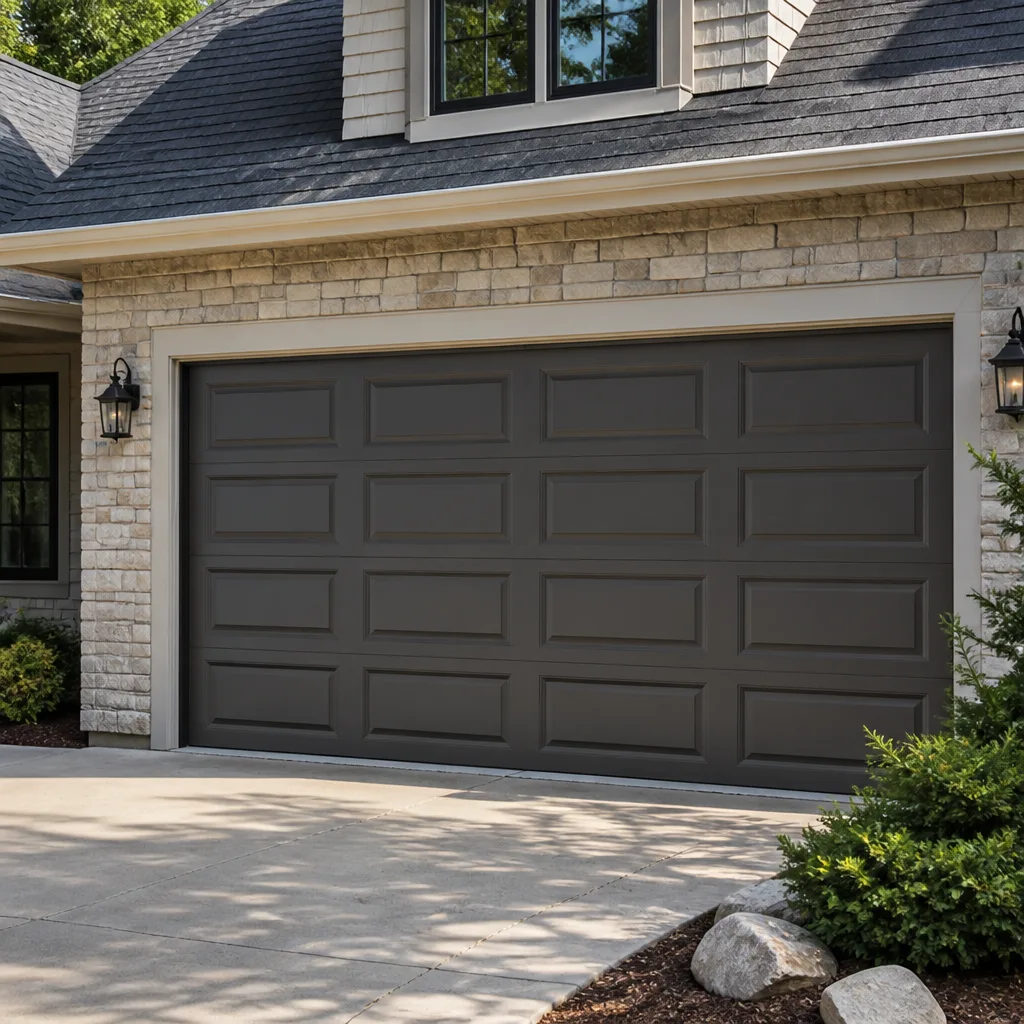 Raised-panel steel
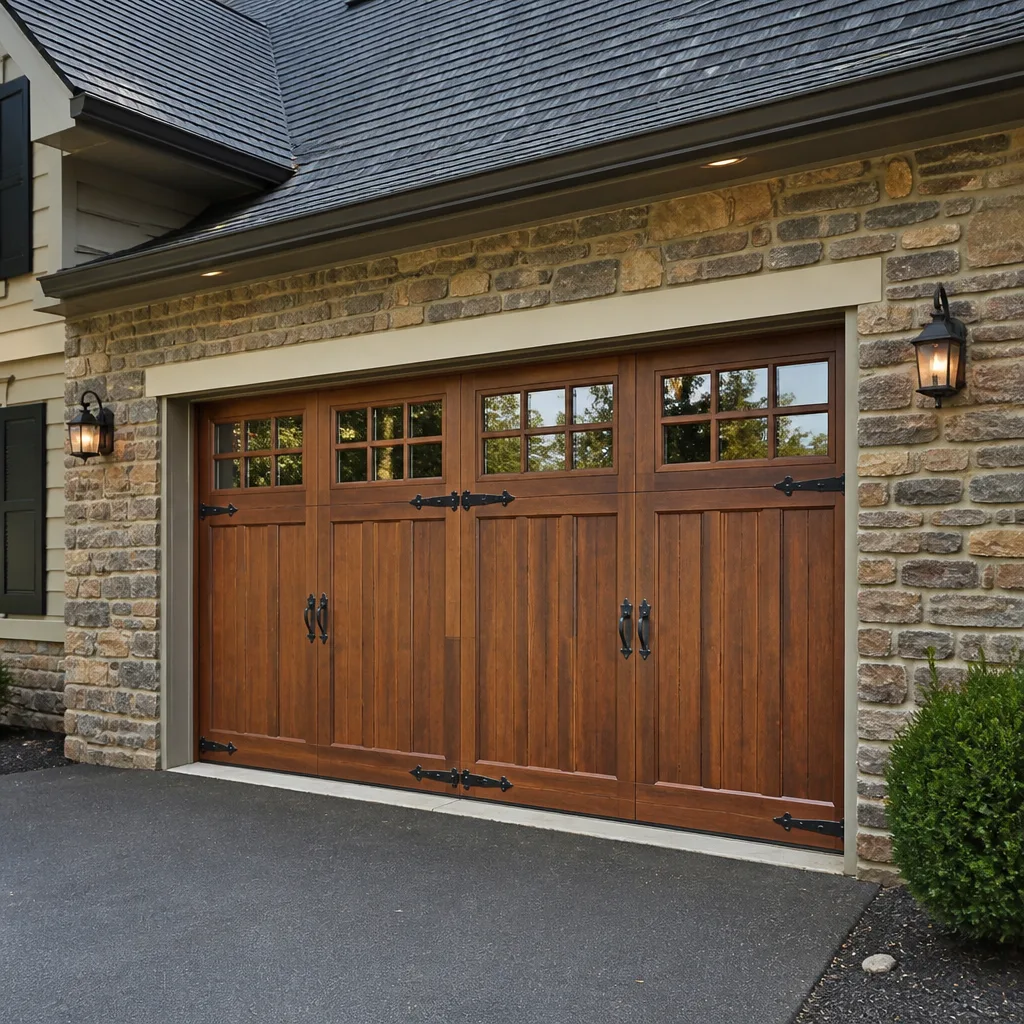 Carriage house
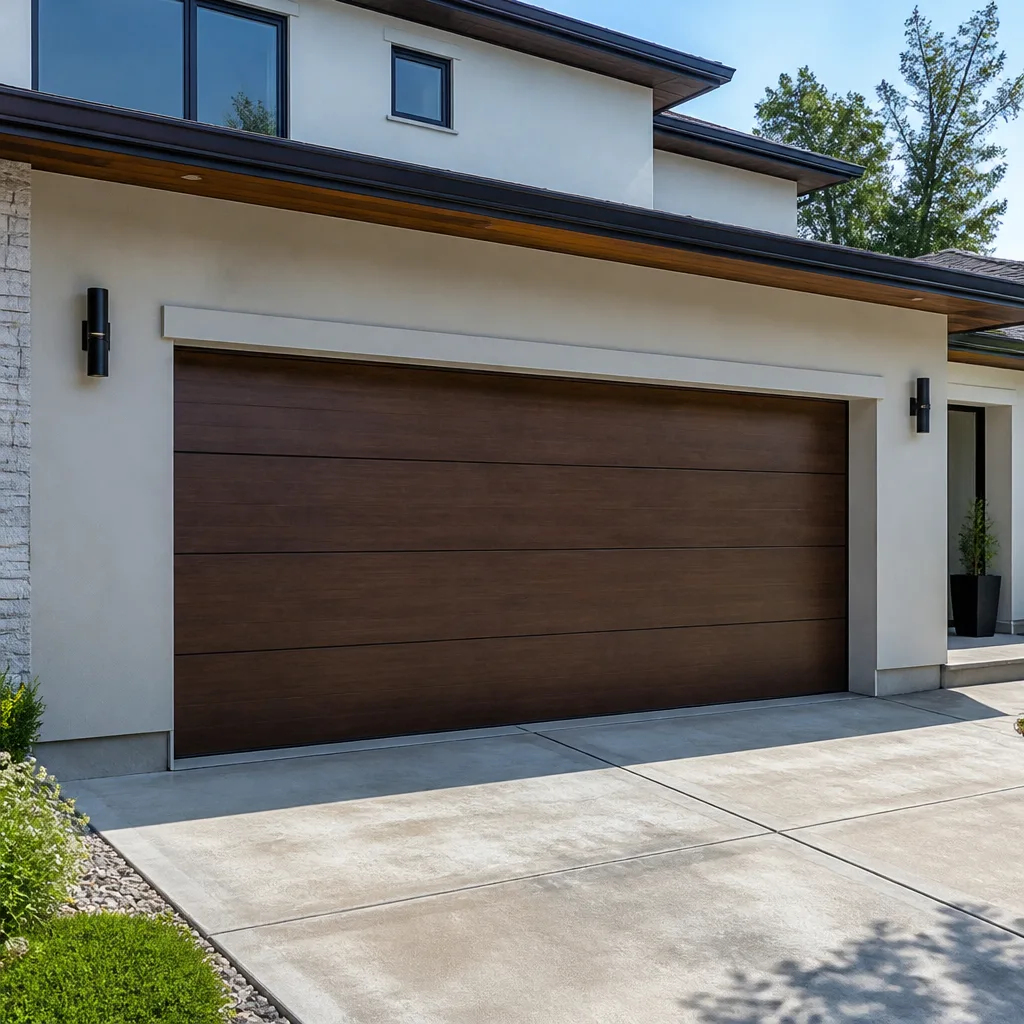 Modern flush
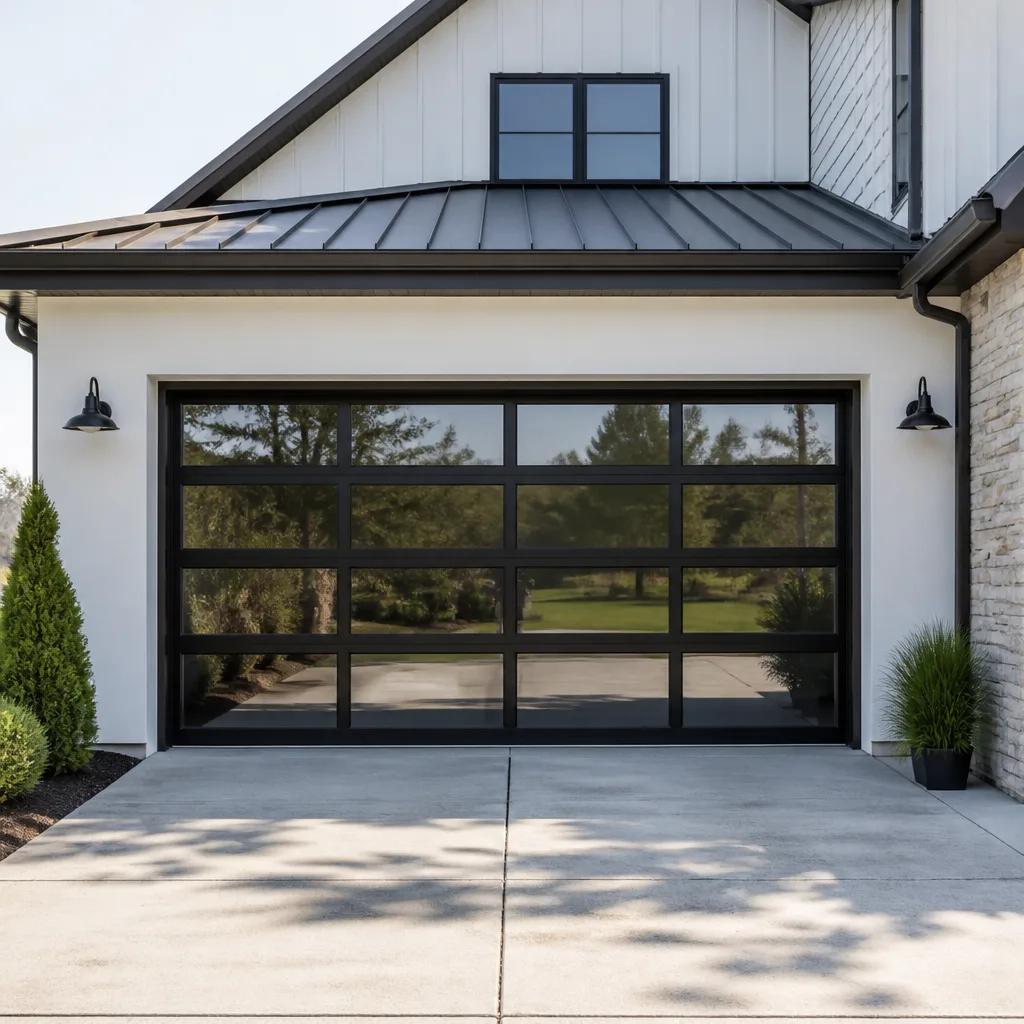 Full-view glass
 LiftMaster openers
 Chamberlain openers
Full 25-point door and opener safety check with every visit - springs, cables, rollers, tracks, and your LiftMaster or Chamberlain opener included
You get a price before we start. It does not change when the truck arrives.
Get your free estimateGarage Door Cost Breakdown: The New York Homeowner’s Reference for 2026
In 2025, a homeowner in Queens paid $1,180 for a torsion spring replacement that should have run between $280 and $420. The technician quoted $89 for a “safety inspection,” then found $1,091 worth of “urgent problems” within eight minutes of arriving. That pattern isn’t rare in New York. It’s the business model for a certain kind of operator, and the only real defense is knowing the numbers before the truck pulls up. This guide gives you those numbers: what every common garage door repair should cost in New York in 2026, what drives the price up or down, and how to read a quote so the number you hear first is the number you actually pay. For more guides & resources, see our blog.
Quick Answer
In New York, expect to pay $180 – $340 for a single torsion spring replacement, $250 – $650 for a full spring system replacement, $150 – $325 for a cable repair, and $450 – $950 for a new garage door opener installed. Labor rates across the five boroughs run 20 – 35% above the national average due to insurance, parking, and operating overhead. Every price on this page should be confirmed in writing before any work starts.
Styles & brands we work with
Table of Contents
- The Real Anatomy of New York Garage Door Pricing
- 2026 Repair Cost Ranges: What You’ll Actually Pay in New York
- Why New York Labor Rates Run 20 – 35% Above the National Average
- How to Read a Garage Door Quote in New York
- What a Failed Cheap Repair Actually Costs
- New Garage Door Cost Breakdown for New York Homes
- The Kingswell Written-Price Standard: Why It’s the Baseline
- Common Mistakes to Avoid
- When to Call a Professional
- Frequently Asked Questions
The Real Anatomy of New York Garage Door Pricing
Every garage door repair invoice in New York is built from three components: parts, labor, and operating overhead. Parts are the torsion spring, the cables, the rollers, the opener motor. Labor is the technician’s time, usually billed in a flat rate per job type rather than by the hour. Overhead is where New York pricing diverges sharply from the rest of the country: commercial auto insurance for a service vehicle in Brooklyn or the Bronx runs significantly higher than in, say, Ohio or Indiana. Parking tickets, fuel, and the simple reality that a technician can reach three jobs a day in the suburbs but often only two in Manhattan traffic all get baked into the number on the estimate.
The parts themselves are not meaningfully more expensive in New York than anywhere else. A quality torsion spring from a reputable manufacturer costs roughly the same whether it’s shipped to a warehouse in Yonkers or one in Akron. The range you see on a quoted repair reflects mostly labor and the company’s cost structure, not the price of the metal. That’s important to understand because it means the spread between a fair New York price and an inflated one is a choice a company makes, not an inevitability of geography.
In our experience across the five boroughs and into Westchester and Long Island, a legitimate shop operating with the proper insurance, background-checked technicians, and a service vehicle that isn’t on its last axle simply cannot survive on $89 service-call pricing. That number exists almost entirely as a foot-in-the-door. By the time the same technician leaves, the invoice is usually $400 to $800, and the homeowner never saw a line item before the work began. The structure of the offer is the tell: an unbelievably low entry price followed by an unverifiable diagnosis.
This guide uses real 2026 ranges drawn from what we quote and what we see competitors quote across the New York market. Use them as a reference point when you’re on the phone with any company, including Bramwell Garage Doors New York home.
2026 Repair Cost Ranges: What You’ll Actually Pay in New York
Here are the numbers for the six most common garage door repairs in New York, with an explanation of what moves the price within each range. These are complete prices: parts, labor, and the trip, written as what you should expect to see on an honest invoice.
Torsion Spring Replacement: $180 – $340 per spring
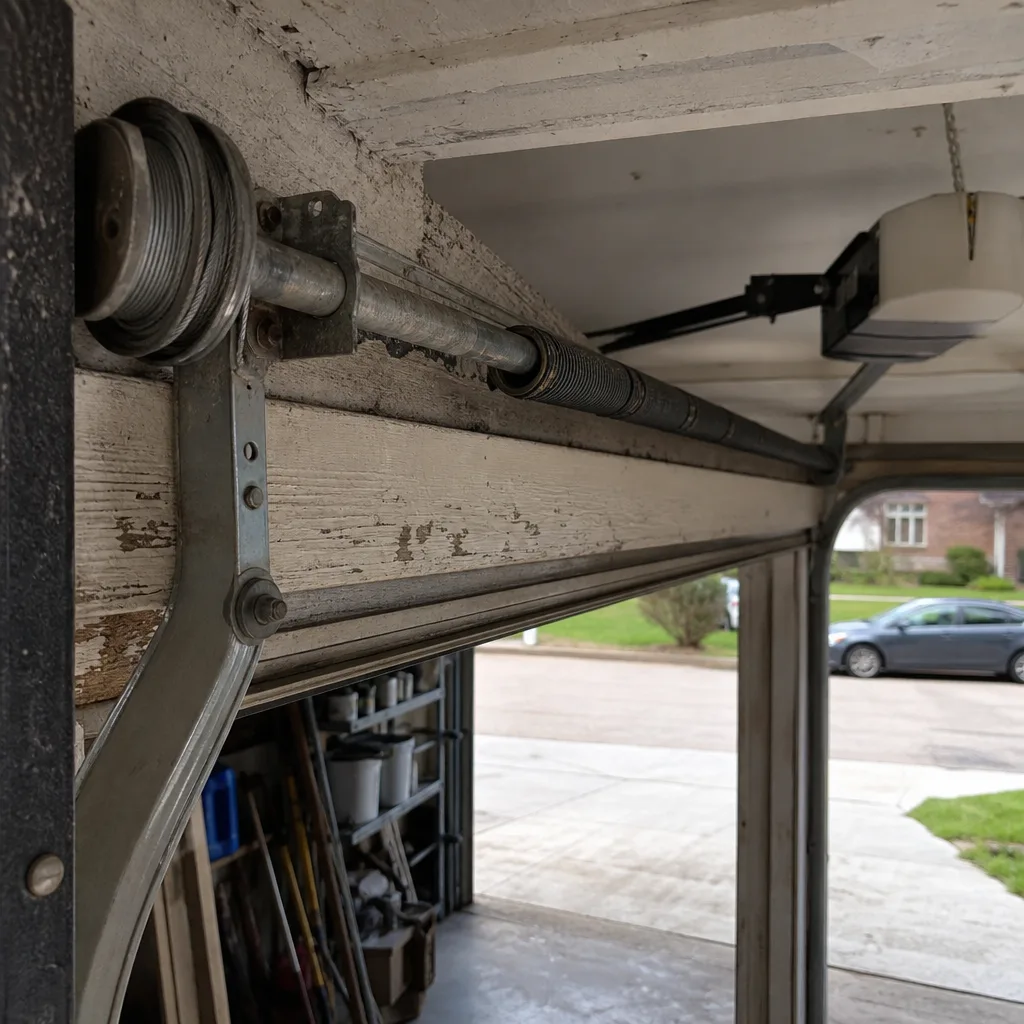
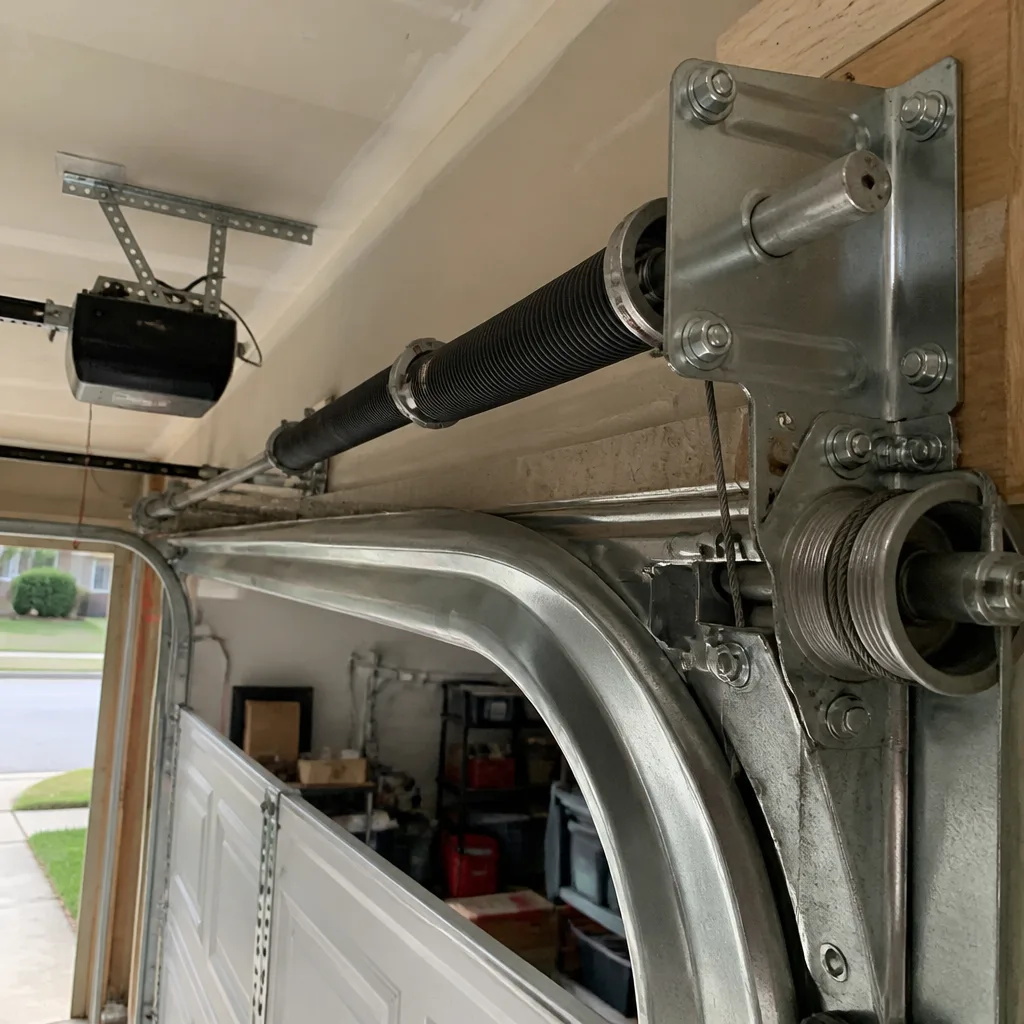
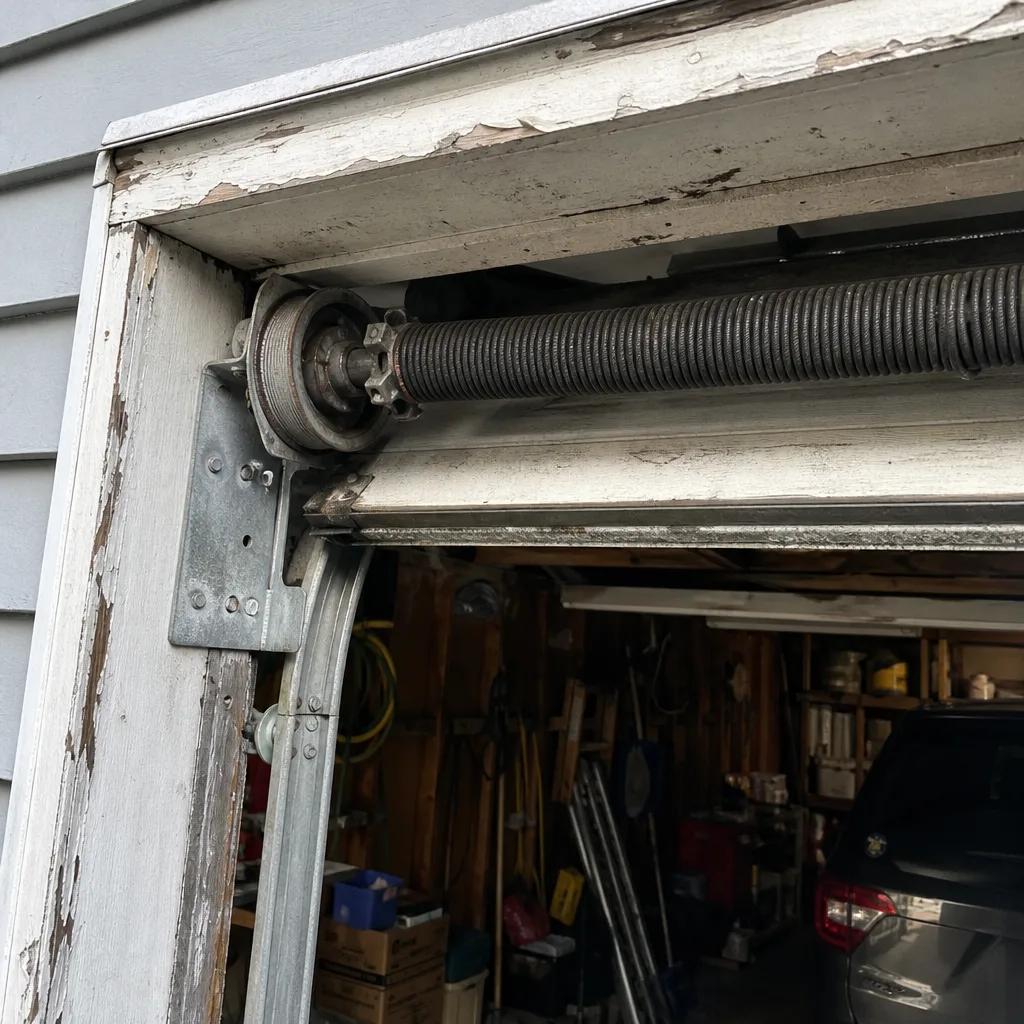
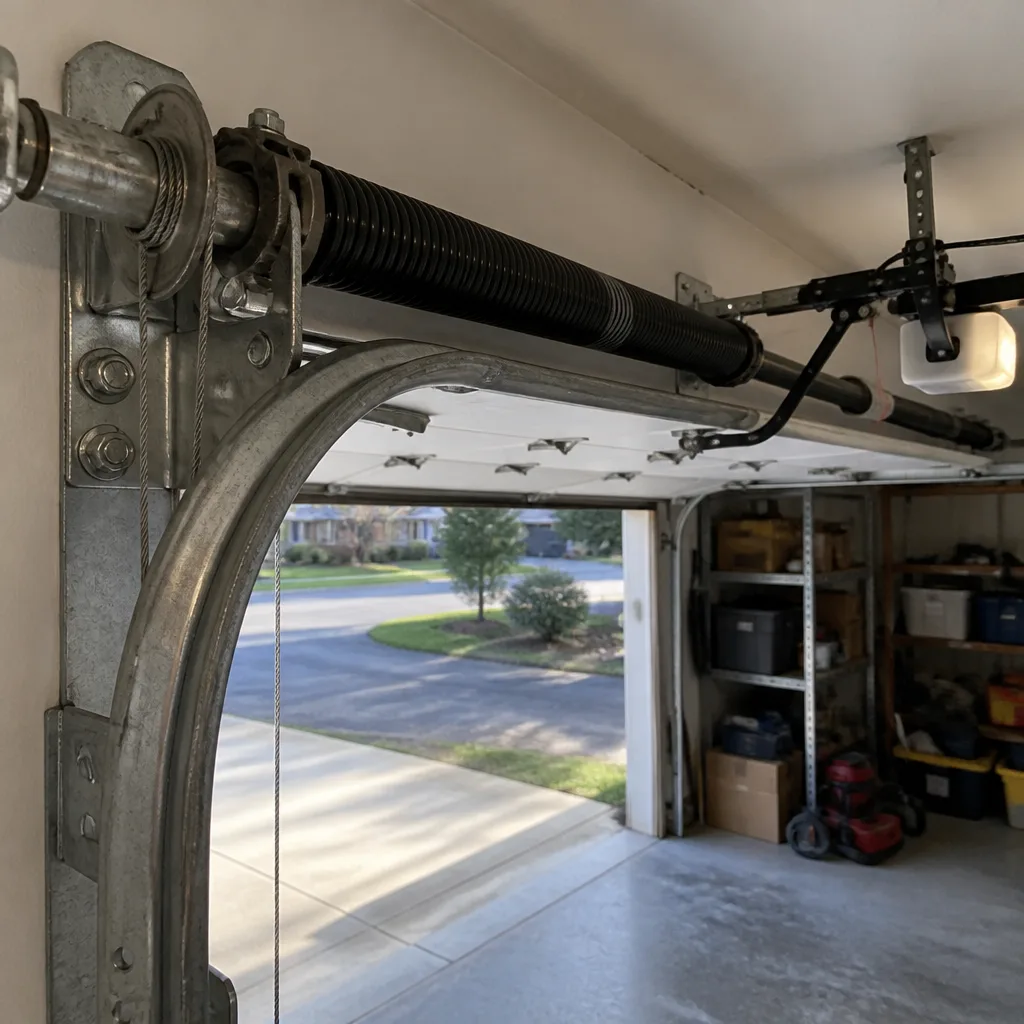
The torsion spring is the heavy coil mounted horizontally above the door. It handles most of the lifting weight, and when it breaks, the door will not open, or it will open a foot and slam back down. Single-spring repair runs $180 – $280 for a standard 7-foot residential door. If you have two springs and one breaks, a reputable company will often recommend replacing both, since the second spring has the same age and fatigue. A two-spring replacement typically runs $280 – $420. High-cycle springs, which last roughly 25,000 to 40,000 cycles instead of the standard 10,000, add $40 – $90 per spring. A cycle is one open and one close, so a family that uses the door four times a day will get roughly seven years from a standard spring and closer to seventeen from a high-cycle one. Expect the technician to explain the cycle rating, not just say “heavy duty.”
Cable Replacement: $150 – $325
The cables are the steel wires running along both sides of the door that connect the bottom brackets to the drum at the top. They carry the door’s weight when it’s in motion. Cables fray, roll off the drum, or snap outright. A single-cable replacement in New York typically costs $150 – $220. Replacing both cables, which is wise if they show equal wear, runs $225 – $325. One note: a cable that snaps is frequently a symptom of a broken spring, because the door came down too hard and sheared the cable. Learn to spot problems early with our Garage Door Warning Signs: A New York Homeowner’s Reference Guide. A good technician checks the springs before quoting cable work alone. If a company quotes only a cable replacement on a door that “sounds fine,” ask them to check the spring tension on-site before you agree to the number.
Roller Replacement: $110 – $250
Rollers are the small wheels that run inside the vertical and horizontal tracks. Nylon rollers are quieter and last longer than steel; you’ll pay around $110 – $180 to replace a set of ten nylon rollers on a standard single door, and $180 – $250 for a heavier double door. Rollers aren’t a high-drama failure item, but worn rollers cause the door to sound like a shopping cart with a bent wheel and put stress on the tracks and hinges. This one is straightforward and worth doing when the noise starts. Any Garage Door Repair in New York shop worth its salt will include the roller condition as part of any spring or cable job.
Track Realignment or Repair: $140 – $320
Tracks are the metal channels the rollers run in. They’re mounted vertically at the sides and horizontally back into the garage. Tracks aren’t meant to bear the door’s weight, so when they bend, it’s usually from an impact: a car bumper, a ladder falling, a kid on a bike. Realignment alone might cost $140 – $200. Replacing a bent section runs higher, $200 – $320. A bent track should never be ignored, because the strain it puts on the opener will eventually destroy the opener’s gears or the door’s hinges.
Photoelectric Sensor Alignment or Replacement: $90 – $220
The photo eyes are the two small units mounted about six inches off the floor on either side of the door opening. They send an invisible beam across the threshold, and the door will not close if that beam is broken. This is a safety feature that has been required on all residential openers since 1993. Alignment is a $90 – $140 service call, mostly labor. If a sensor is dead and needs replacing, expect $150 – $220. One New York-specific note: in older brownstones and converted carriage houses, sensors sometimes get mounted on uneven or crumbling surfaces, which means they drift out of alignment every few months. If your door refuses to close and the sensor lights are blinking but won’t hold steady, this is usually the culprit.
Garage Door Opener Replacement: $450 – $950 installed
A chain-drive opener from a proven brand like Chamberlain or Genie runs $450 – $650 installed in New York. Belt-drive units, which are meaningfully quieter and the right call for bedrooms above or beside the garage, run $650 – $950. This range includes the opener, the install, and haul-away of the old unit. The spread within the range depends on the brand, drive type, horsepower, and whether your existing wiring and mounting are in good shape. If a technician quotes below $400 for a new opener installed, something is off: either the unit is an obsolete model being cleared out, or the labor is being subsidized by upselling you on rollers, hinges, or a “tune-up” once the opener is bolted in. Full opener and door information, including brand comparisons, lives on our Garage Door Installation in New York page.
Why New York Labor Rates Run 20 – 35% Above the National Average
National pricing guides tend to put a torsion spring replacement at $90 – $150. In New York, the honest range starts around $180. That gap isn’t greed. It’s arithmetic.
First, commercial vehicle insurance in New York City is among the most expensive in the country. A service van driven in Brooklyn, Queens, or the Bronx carries a premium that can be triple what the same van costs to insure in a midwestern suburb. That is a fixed monthly cost whether the technician does one job or six.
Second, time per job is simply worse here. A technician in a spread-out suburban market stops at a house, parks in the driveway, walks to the garage, and works. A technician in Park Slope or Astoria spends time finding parking, sometimes parking blocks away, walking tools to the job, and then doing it again at the next stop. That lost time means fewer jobs per day to spread the fixed costs across, and that difference lands on every invoice.
Third, the cost of doing business in New York, from the shop lease to the disposal fees for old openers and springs, runs above the national norm. None of this shows up as a line item, but it’s real.
What this means for you as a homeowner: do not compare New York prices to a national search result. Compare them to other New York prices. A $89 spring replacement doesn’t exist here unless the company plans to make up the difference elsewhere. The fixed components of the price (the spring itself, the diagnosis, the safe disposal of the old part) are largely the same from company to company. The variable components are the labor rate, the markup, and the honesty of the quote. That’s where you protect yourself.
How to Read a Garage Door Quote in New York
There are two types of quotes in this trade. One is a number scrawled on a work order after a five-minute diagnosis. The other is an itemized estimate with the part, the labor, the warranty, and a total that doesn’t change. Only one of those is worth considering.
A legitimate itemized estimate for a garage door repair in New York should include all of the following:
- The specific part and its brand or grade. “Torsion spring, 218×1.75×27, high-cycle” tells you the wire gauge, inside diameter, and length. “Spring, heavy duty” tells you nothing.
- The labor as a flat rate per job, not an hourly rate. Flat rate is standard because an experienced technician might do a spring swap in 25 minutes. You don’t want to argue about whether 25 minutes of work at $90 an hour means the price should come down. You want to know the job costs $240, full stop.
- The warranty terms in writing. How long is the part covered? Is labor included if it fails? A one-year parts-and-labor guarantee is a reasonable benchmark. If the warranty is verbal only, it doesn’t exist.
- The total, with tax, and a clear statement that this total is the final price. If the total is missing or qualified with words like “about” or “roughly,” it’s not a quote. It’s a guess.
At Bramwell Garage Doors New York, the written price is not a courtesy. It’s the first of the four Kingswell standards, and it applies to every job, without exception. The technician arrives, diagnoses the issue, writes the price on the work order, and does not open the toolbox until you’ve seen the number and signed off. The invoice matches the quoted number, or the quote was wrong, and the difference is ours to absorb.
If a New York company won’t put a price in writing before you’ve committed, that’s not a minor red flag. That’s the red flag. The entire point of the written price is that it removes every incentive for the diagnosis to drift toward the most expensive possible interpretation.
What a Failed Cheap Repair Actually Costs
Here’s a scenario we see repeatedly in New York. A homeowner calls a company advertising $79 springs. The technician arrives, installs the cheapest spring available, and the door works. For a while. Six or eight months later, the same spring breaks again. The company is now unreachable, or the warranty turns out to have been the salesman’s invention. The homeowner calls a different company and pays $240 for the spring that should have been installed the first time. Total cost of the bargain: $79 plus $240, plus the time lost and the stress of a door that won’t open on a Tuesday morning.
A below-market spring replacement fails early for three reasons. The spring may be under-sprung: sized for a lighter door than the one it’s lifting, so it’s working harder than it’s rated for. It may be a low-cycle spring rated for 10,000 cycles, which a four-cycle-per-day household burns through in about seven years, and the spring was already old stock when it went in. Or it may not be matched to the door’s weight at all, because the technician who installed it never weighed the door, just grabbed the most common size off the truck.
The second-visit cost isn’t a secret number. In New York, the honest repair that should have been quoted the first time runs $180 – $320 per spring. The expensive part isn’t the second spring. It’s the seven months during which the door was operating under stress, wearing the cables, the drums, and the opener gears. Cheap spring work frequently triggers a cascade of failures that turn a $240 problem into a $700 one.
The Kingswell 365-Day Done Right Promise exists specifically to make this pattern impossible. If a repair made by us fails within a year, we come back and make it right at no charge. That promise is in writing on every work order, not offered as a verbal assurance at the door. It applies to spring repairs, cable work, opener repairs, roller replacements, and everything else we touch.
For readers specifically researching spring failure, our Garage Door Spring Repair in New York page covers the full range of spring types, cycle ratings, and what we replace as a matter of standard practice.
New Garage Door Cost Breakdown for New York Homes
A new garage door is a different purchase from a repair. It’s measured, ordered, built, and installed, and the pricing reflects that longer cycle. The budget for a standard single-car steel door in New York starts around $1,200 installed and can exceed $4,500 for a custom wood or full-vision door on a double-car opening.
Here’s where the money goes on a new door in the New York market:
- The door and panels. A basic steel raised-panel door from a brand like Clopay or Amarr runs $500 – $1,100 for the door itself. Insulated doors add $200 – $500 depending on the R-value.
- Hardware and track. Tracks, hinges, struts, and fasteners add $150 – $350 depending on the door’s weight and size.
- Labor. New door installation labor in New York runs $400 – $900 depending on whether it’s a single or double door, and whether the old door and its hardware need to be removed and hauled away.
- Disposal. Hauling away the old door runs $75 – $150 on most quotes, though some companies fold it into the labor line.
- Optional upgrades. Windows, decorative hardware, a new WeatherGuard threshold, or a matched door from a higher-tier brand like Raynor all push the total up $300 – $1,200.
One thing to understand about New York specifically: many attached garages in older neighborhoods open directly into the house, and the garage door is the largest uninsulated surface in the building envelope. In a New York winter, an uninsulated steel door conducts cold straight into the living space. The upgrade from an uninsulated to an insulated door is one of the few garage-door choices that pays you back in comfort immediately, especially in houses where the garage wall is shared with a kitchen or bedroom.
A new door installation is not an emergency. You’re scheduling a measurement, choosing a style and an insulation level, and waiting for the door to be built or delivered. A quality Garage Door Installation in New York company will offer you a free measure and a written price before you commit to anything, and will schedule the install for a window that works for you.
The Kingswell Written-Price Standard: Why It’s the Baseline
The single most reliable predictor of whether you’ll finish a garage door transaction satisfied or furious is whether you saw a price in writing before the work started. Everything else, the uniform, the van, the handshake, the Yelp page, is secondary.
The Kingswell Way, the standard that every Bramwell location including Bramwell Garage Doors New York has committed to since 2001, is built on five values that run in order: say the price before the work, show up in the window you promised, leave the place cleaner than you found it, put the guarantee in writing, and come back if it fails. Four promises sit beneath those values:
- A written price before any work starts. Not a verbal range, not a guess, not a number that gets revised after the door is in pieces on the driveway. A written number, on the work order, before the first tool comes off the truck.
- A real arrival window. A window is a two-hour or three-hour block. It’s a commitment to be somewhere at a specific time, not a vague “sometime between 8 and 6” that leaves you hostage in your own house.
- A clean job site. The old spring, the dead opener, the broken cable, the packaging, the grease rags: all of it leaves with the technician. You shouldn’t find shards of broken spring in the corner of your garage a month later.
- A written guarantee. The 365-Day Done Right Promise means that if the repair fails within a year, we come back and fix it at no charge. That commitment is in writing on every job, and we honor it without an argument.
Marcus Ellery, the owner at Bramwell Garage Doors New York, put the standard simply when he set up the New York location: a guarantee means nothing if it doesn’t survive the moment it’s tested. That’s why ours is in writing. Not on a sticker. On the work order.
When you call any garage door company in New York, listen for the difference between a company that says the price before you ask, and one that deflects the pricing question until the technician is standing in your garage. One of those companies has committed to a standard. The other has committed to a sales process. They are not the same thing.
Common Mistakes to Avoid
- Hiring on price alone. The $89 tune-up in New York is the top of a funnel. By the time you reach the bottom, you’ve usually spent $400 – $800. If a number seems impossibly low, ask what it actually includes in writing before you book the call.
- Approving work without a written estimate. Once the door is dismantled, the leverage shifts completely. You cannot compare prices when your car is trapped in the garage and the old spring is lying on the floor. The written price is the single most important document in the entire transaction. Don’t skip it.
- Ignoring a broken cable because “the door still works.” A door running with one cable missing or frayed is riding unbalanced. That imbalance destroys rollers, then tracks, then the opener. The $175 cable repair is the cheapest version of this problem.
- Choosing springs rated for fewer cycles than your actual usage. A four-cycle-per-day household needs a high-cycle spring or you’ll be replacing the same spring every six or seven years. The upgrade is small. The difference in lifespan is not.
- Attempting a DIY spring replacement. The torsion spring is under hundreds of pounds of tension. Injuries from spring failures are severe and permanent. This is not a YouTube project. This is not a weekend task. This is a parts-and-labor flat-rate service that tradespeople train for, and it’s the one repair on this list where the professional fee is genuinely the cheapest option.
- Not asking what the warranty covers, in writing. A guarantee is not a sentence a technician says at the door. It’s a written document that says what happens if the repair fails, for how long, and whether labor is included in the callback. Ask for it. If the answer is vague, that’s your answer.
- Choosing a company with no local presence in New York. A toll-free number that routes to a dispatch center in another state cannot guarantee you a technician in the five boroughs. Choose a company that has boots in your ZIP code and is accountable to the people who live there.
When to Call a Professional
Any tension-bearing component, which means the torsion spring, the extension springs, and the lift cables, is a professional job. Period. These parts are under enough stored energy to cause catastrophic injury if they let go. The same goes for any repair involving a door knocked off its tracks by a vehicle impact. If the door is leaning, sagging, or hanging at an angle, don’t operate it. Don’t try to straighten it. Call someone who does this every day.
An opener replacement is less dangerous but still a professional job: it involves line-voltage wiring, safety sensor alignment, and programming the travel limits that keep the door from crushing whatever’s under it if the auto-reverse is misconfigured. A bad DIY opener install isn’t just annoying; it’s a safety issue.
Bramwell Garage Doors New York offers free estimates across the New York area, with background-checked, uniformed technicians who arrive within a stated window and put the price in writing before any work starts. Call (585) 669-6563 and a live person will answer, any time, day or night.
Frequently Asked Questions
A single torsion spring replacement in New York typically costs $180 – $340, and a two-spring replacement runs $280 – $420, depending on the spring’s cycle rating and wire gauge. The price is flat-rate, meaning it includes parts, labor, and the trip. Call (585) 669-6563 for an exact quote on your door, written before any work starts.
New York labor rates run 20 – 35% above the national average because commercial vehicle insurance, parking, traffic time, and operating overhead are all significantly higher here than in lower-density markets. For details on local requirements, see Garage Door Permits, Codes & Inspections in NY: What You Need to Know. The parts themselves cost about the same; the difference is in the cost of running a legitimate service operation in the five boroughs.
A fair quote is written, itemized, and includes the specific part, the flat-rate labor, the written warranty, and a total that does not change. If the quote is verbal only, or the company resists putting numbers on paper before you commit, treat that as a warning sign regardless of the price they mention.
A standard single-car steel door with installation runs $1,200 – $2,800 in New York. A double-car insulated door runs $2,000 – $4,500 or more with upgrades like windows, a higher R-value, or a premium brand. The spread depends on insulation, size, brand, and whether the old door needs to be hauled away.
Not with a company that works to a written-price standard. At Bramwell Garage Doors New York, the price is written before any work begins, and the invoice matches that number. If a company gives a phone estimate and then revises it upward after diagnosis, that’s a pricing process problem, not a legitimate adjustment. Ask for the number in writing before you approve anything.
Yes. Our New York trucks carry a full inventory of torsion springs in the common residential sizes, cables, rollers, hinges, brackets, and safety sensors. Most spring and cable repairs are completed the same day, usually within one visit. If your door needs a part we don’t routinely stock, we’ll tell you before you commit to the call. Call (585) 669-6563 to confirm your specific setup.
The Bottom Line
Garage door pricing in New York is not a mystery. The honest ranges for the six most common repairs are published above, and nothing in this market justifies a spring replacement at $89 or a two-spring job at $700. The variables are real: insurance, parking, overhead, and flat-rate labor all cost more here. But the largest variable is the integrity of the quote. Get the number in writing before the work starts, confirm the warranty is on paper, and if the company you’re talking to won’t do either, keep calling. A live person answers at (585) 669-6563 around the clock, and we’ll tell you the truth even if you never hire us.
Written by Marcus Ellery, Owner at Bramwell Garage Doors New York, serving New York since 2001.
See the difference
 Before
 After
 Before
 After
 Before
 After