
Last updated October 16, 2026
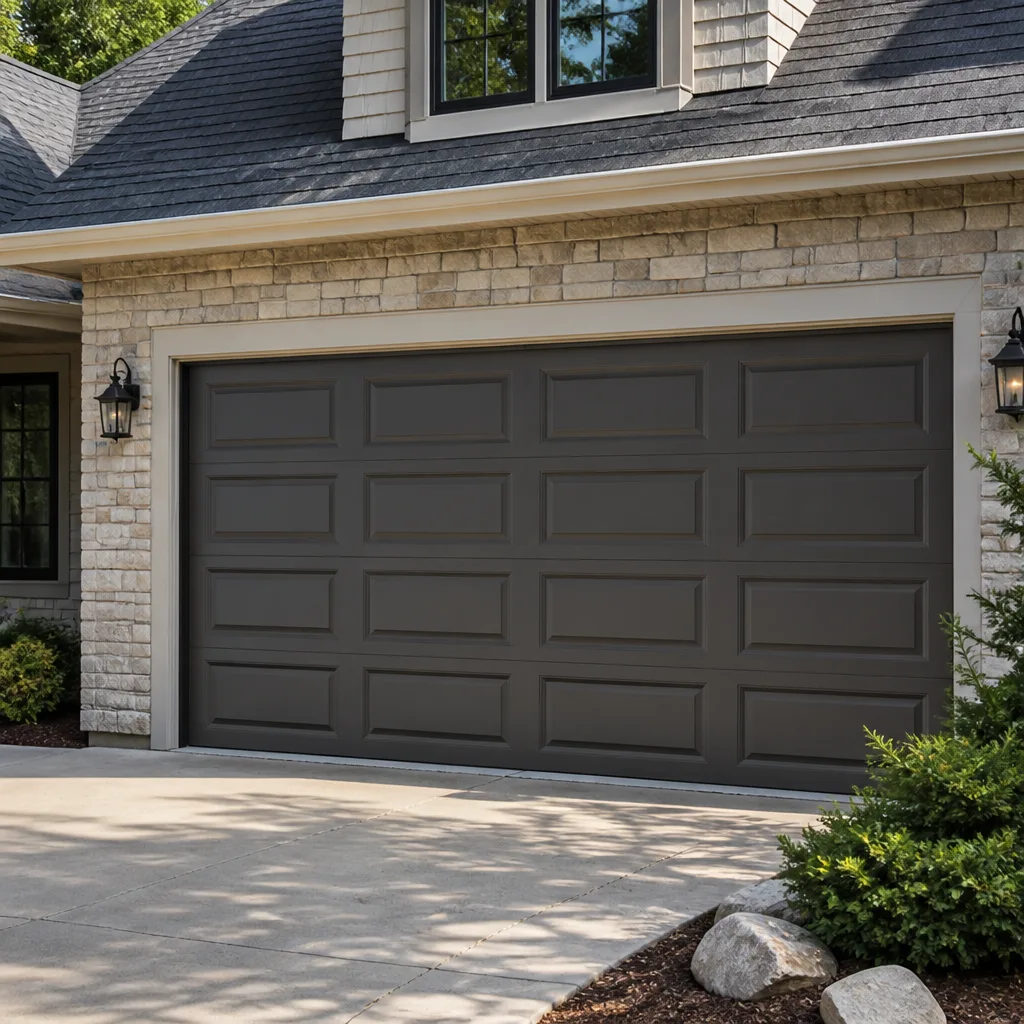 Raised-panel steel
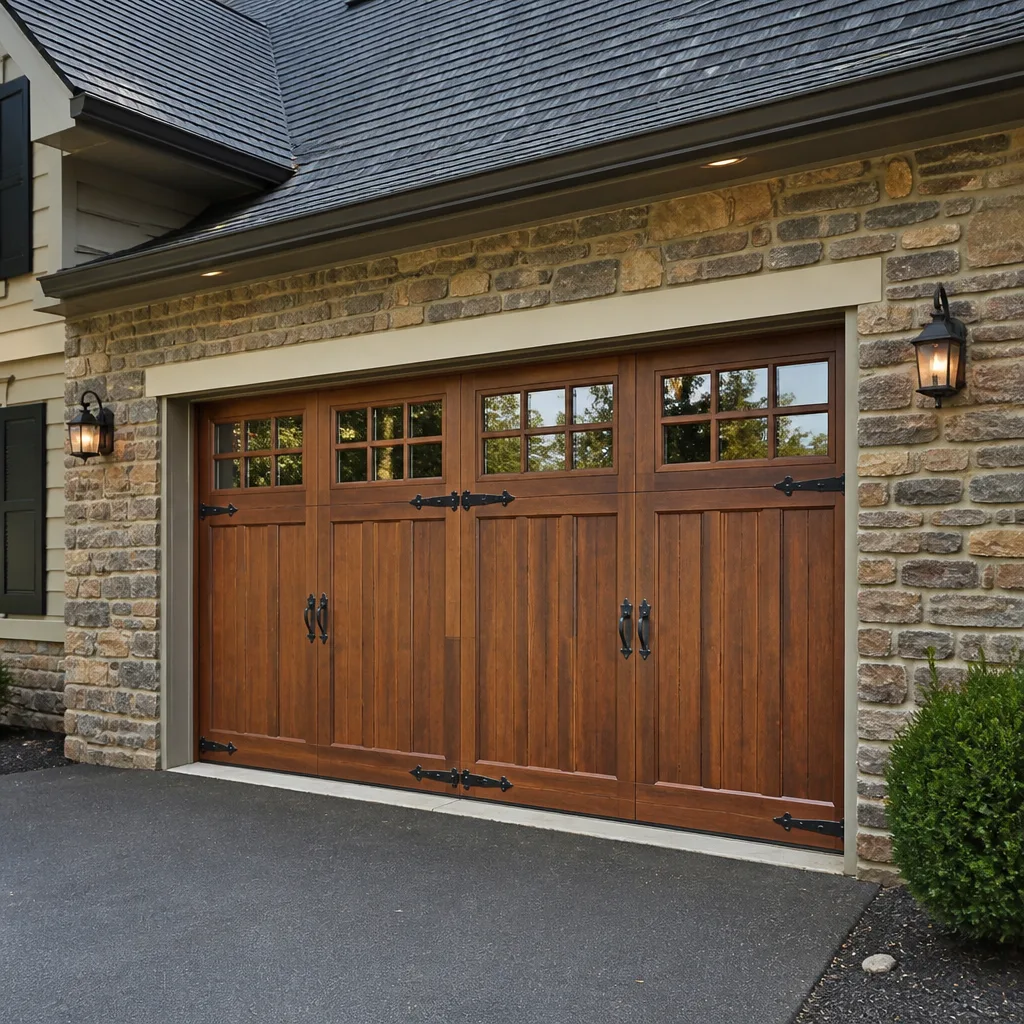 Carriage house
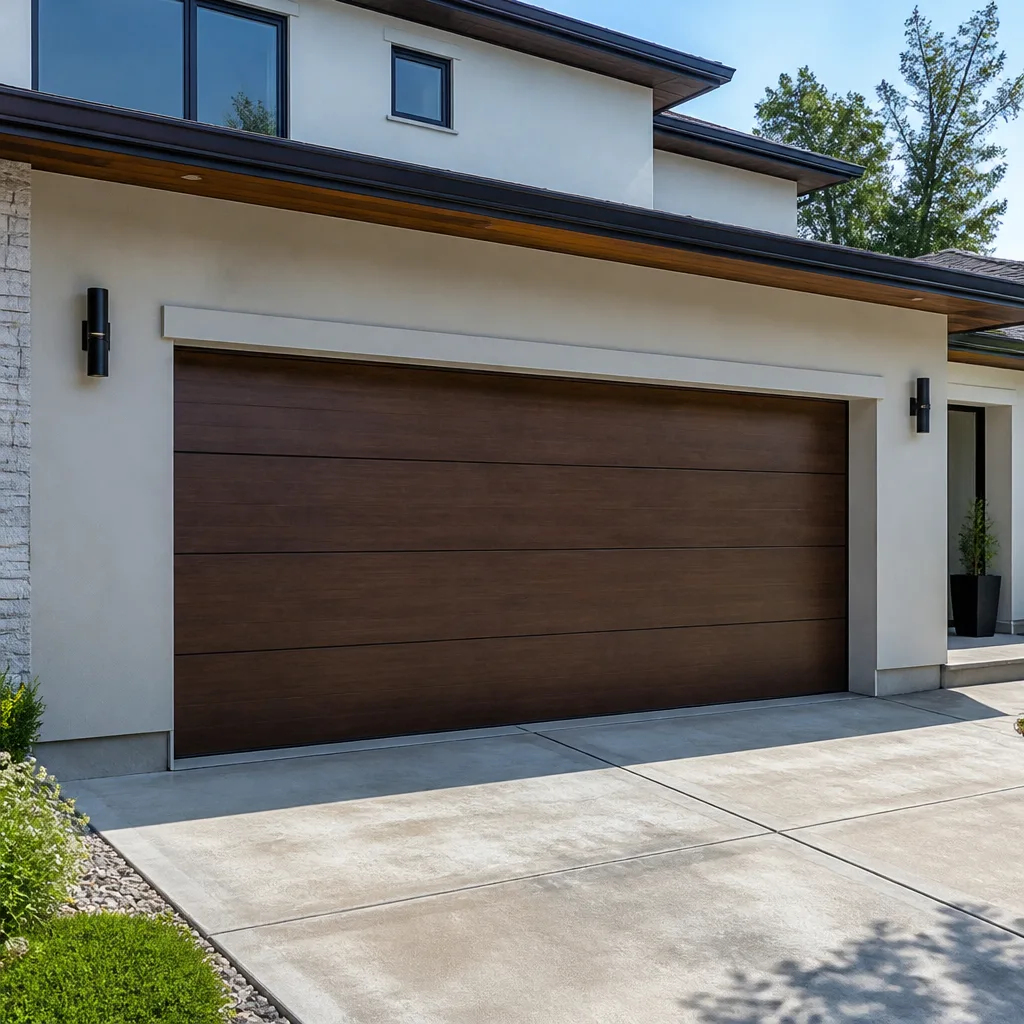 Modern flush
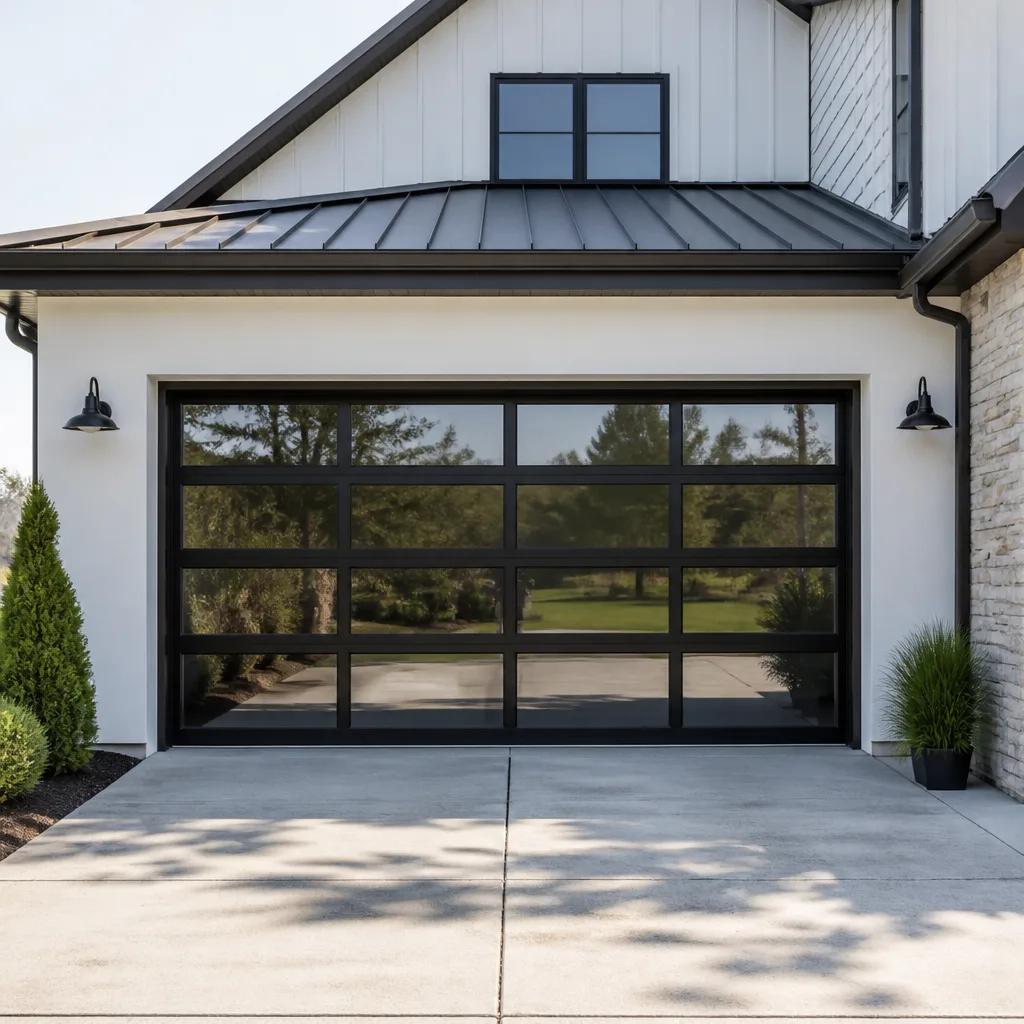 Full-view glass
 LiftMaster openers
 Chamberlain openers
Full 25-point door and opener safety check with every visit - springs, cables, rollers, tracks, and your LiftMaster or Chamberlain opener included
You get a price before we start. It does not change when the truck arrives.
Get your free estimateGarage Door Warning Signs: A New York Homeowner’s Reference Guide
Here’s a pattern we see every winter in New York: a homeowner calls us on a Tuesday morning because their garage door won’t open at all. As we talk through what happened, they mention the door had been making a strange noise for a month, or that it felt heavier lately, or that one side sat a little lower than the other. None of those signals meant anything to them at the time. But each one was the door telling them exactly what was about to fail. This guide walks through every warning sign a New York garage door gives before it breaks, what each sign points to, and which ones mean stop using the door today. For a broader overview, see The Complete Guide to Garage Door in New York.
Quick Answer
The most common garage door warning signs are a grinding or squealing noise during operation, a door that hangs unevenly or sags on one side, visible slack in the lift cables, a door that hesitates or reverses without anything in the way, and rust forming at cable attachment points or along the bottom panel. Any of these means a component is failing and needs attention, usually within days to weeks. Two signs mean stop using the door immediately and call a professional: a snapped or visibly fraying cable, and a torsion spring that has broken or is making a loud bang sound.
Styles & brands we work with
Table of Contents
- Sound-Based Diagnostics: What Your Garage Door Is Telling You
- Visual Warning Signs You Can Check From the Driveway
- The Response-Time Test: Hesitation, Lurching, and False Reversals
- Why New York Winters Accelerate Specific Failures
- Safe to Monitor vs. Stop Using the Door: A Clear Line
- What Each Warning Sign Costs to Fix in New York
- A Seasonal Warning-Sign Calendar for New York Homeowners
Sound-Based Diagnostics: What Your Garage Door Is Telling You
Garage doors are loud machines by nature, but they should sound consistent. A door that changes its sound from one week to the next is signaling something. Here are the four sounds we hear described most often on service calls across New York, and what each one means.
A grinding noise is almost always the trolley carriage, the plastic or metal shuttle that rides along the opener rail and pulls the door up and down. When the carriage teeth wear down, metal scrapes against metal and produces a grinding that’s most noticeable in the middle of the door’s travel. This is common on LiftMaster and Chamberlain openers after 7 to 10 years of daily use. The fix is usually a carriage replacement, which is a straightforward repair.
A loud bang coming from above the door, usually followed by the door refusing to move, is a torsion spring failure. The torsion spring is the heavy coil mounted on a shaft above the center of the door that handles most of the lifting weight. When it breaks, the release of tension sounds like a gunshot or a car backfiring. In our experience serving New York homes, this most often happens on cold mornings when the metal is at its most brittle. If you hear this sound, do not try to open the door manually, the spring is under enormous tension and the door may be far heavier than you expect.
A squeal or high-pitched whine is usually a dry bearing. The rollers that guide the door in its tracks have small bearings inside them, and when the lubricant dries out, the bearing produces a metallic squeal. This is a maintenance issue rather than an emergency, but left unaddressed, the bearing can seize, and a seized roller can derail a door. A dry bearing on a Raynor or Genie opener’s drive system produces a similar sound but from the motor housing itself.
A rattle is loose track hardware. The vertical and horizontal tracks that guide the door are bolted to the wall and ceiling, and those bolts work loose over time from the vibration of normal operation. A rattle usually means a bolt or two has backed out, which is a quick tightening job. But it can also mean the track itself has shifted slightly, changing the angle the door travels on and putting uneven wear on every moving part.
The useful thing about sound is that it gives you a head start. A grinding noise today is a warning, not a breakdown. The same grinding ignored for six weeks becomes a door that won’t open on a Monday morning.
Visual Warning Signs You Can Check From the Driveway
You don’t need to touch anything or climb a ladder to perform a useful inspection. Standing in your driveway with the door closed, here’s what to look for.
An uneven gap at the bottom seal. When the door is fully closed, look at where the bottom of the door meets the concrete. If one side has a visible gap and the other doesn’t, the door is no longer sitting level. This means tension is uneven across the system, usually because one spring is weakening faster than the other on a two-spring door, or because a cable has stretched slightly on one side. In New York, this uneven gap also means cold air and rodents have a clear path into your garage in winter, so the cosmetic issue has a functional cost too.
One-side sag while the door is opening. Watch the door as it travels. If one edge lags noticeably behind the other, the cable on that side may be losing tension, or the spring system is no longer balanced. A balanced door rises evenly. A sagging door is working against itself, which accelerates wear on the opener motor.
Visible cable slack. The lift cables are the steel wires running along both sides of the door, connecting the bottom brackets to the cable drums above. They should be taut at all times. If you can see a cable hanging loose or with visible slack when the door is down, that cable has jumped its drum or is starting to fray. This is one of two signs that mean stop using the door immediately. A cable under tension stores an enormous amount of energy, and when it lets go, it can cause serious injury to anyone nearby.
Rust at the cable attachment points. Not all rust is structural. Surface rust on a panel is cosmetic and common on older New York garage doors, especially in coastal areas where salt air accelerates oxidation. But rust at the bottom bracket where the cable connects to the door, or on the spring coils themselves, is different. That rust is active corrosion on a load-bearing component, and it’s a sign that metal fatigue is underway. If the rust flakes off when you touch it, the part is failing. If it’s just a surface discoloration, it’s likely cosmetic.
The Response-Time Test: Hesitation, Lurching, and False Reversals
Here’s a diagnostic you can run without opening anything up. Stand inside the garage and press the wall button. Watch and listen carefully.
A healthy door responds within a half-second and travels smoothly through its entire arc. A door that hesitates before moving, lurches forward, or reverses direction midway without anything in the way is sending a specific signal about one of two components.
Limit switch problems. The limit switch tells the opener how far to travel in each direction. When it drifts out of adjustment, the door may reverse before it reaches the floor, or it may not fully open. The classic symptom is a door that starts to close, stops, and immediately goes back up with nothing in the photo-eye path. Homeowners often assume this is an opener motor problem and start shopping for a new opener. In our experience, about half the time it’s the limit switch, which is an adjustment rather than a replacement. The other half, it’s the spring losing tension and the opener’s safety circuit cutting out because the door is suddenly heavier than the opener is rated to handle.
Tension loss. A garage door opener is not designed to lift the full weight of the door by itself. The springs do most of the work, and the opener is just the muscle that moves things along. When a spring loses tension gradually before failing, the door gets progressively heavier for the opener to move. The opener responds by struggling, hesitating, and eventually tripping its internal overload protector, which causes the false reversal. If your door has started reversing without obstruction and the springs are more than 7 years old, the response-time test is telling you the springs are failing, not the motor.
Run this test once a month. It takes ten seconds and it gives you a baseline. When the response changes, you’ll notice it immediately.
Why New York Winters Accelerate Specific Failures
New York winters are hard on garage door systems in ways that warmer climates don’t see. The cold affects every metal component, but it hits springs and cables hardest.
Spring brittleness. Torsion springs are rated for a specific number of cycles, usually 10,000 for standard springs. But that rating assumes operation in moderate temperatures. In New York, single-digit January temperatures make the spring steel more brittle, and a spring that might have lasted another year in a milder climate lets go on the coldest morning of the winter. The physics is simple, cold metal is harder and less able to absorb the microscopic flexing that happens with every cycle. This is why we field more spring failure calls in January and February than any other months.
Concrete heaving. The concrete slab under your garage door shifts with freeze-thaw cycles. Water seeps into small cracks, freezes, expands, and over the course of a winter, the slab can move enough to change the angle of the door’s bottom seal. A door that sealed fine in October suddenly has a gap in February, and the uneven contact means the door is working against itself every time it closes. In New York, this is one of the most common causes of a door that won’t close fully in late winter.
Lubricant thickening. Grease and lubricant thicken in cold weather. A roller bearing that spins freely in July moves sluggishly in February, and a sluggish bearing puts extra load on the opener. The symptom is a door that sounds like it’s working harder in winter, which it literally is. Some of this is unavoidable, but a silicone-based lubricant applied before the cold sets in reduces it significantly.
Salt and corrosion. If you live within a few miles of the coast or drive on salted roads regularly, your car brings salt into the garage, and that salt ends up on cables, brackets, and springs. Salt accelerates corrosion dramatically. A cable that would last 15 years inland might fail in 8 near the water. The warning sign is rust at the cable ends and bottom brackets, as covered above.
What this means in practical terms: if your door is acting strange in October, don’t assume it’ll wait until spring. The cold will amplify any existing weakness, and you’re far more likely to have a failure in February than in April.
Safe to Monitor vs. Stop Using the Door: A Clear Line
Some warning signs mean keep an eye on it and schedule service when convenient. Others mean stop using the door today. Here’s the clear line.
Safe to monitor:
- A grinding or squealing noise while the door moves. Annoying, but the door is still structurally sound.
- A minor uneven gap at the bottom seal. The door is still functional; it’s just out of balance.
- Hesitation or slow response from the opener. The door is working harder, but it’s still working.
- Surface rust on panels. Cosmetic, not structural.
- A rattle from loose track hardware. Tighten the bolts when you can.
Stop using the door and call a professional:
- A snapped or visibly fraying cable. Cables under tension can whip when they release. The energy in a garage door cable can take off a finger or worse. Do not attempt to reattach or tighten it yourself, and do not operate the door even manually.
- A broken torsion spring. A broken spring means the full weight of the door, often 150 to 300 pounds, is now being handled by the opener or by your arms if you try to lift it manually. The spring is also under residual tension and requires a trained technician to replace safely.
- A door that has come off its tracks. If the door is hanging at an angle or visibly off the track rollers, the entire assembly is unstable and could fall.
- A loud bang followed by the door not moving. This is a spring failure, which falls under item 2. The bang is the sound of stored energy releasing.
The common thread among the stop-using signs is tension. Cables and springs hold enormous stored energy, and when that energy releases unexpectedly, it does not care who is in the way. The safest thing you can do if you see cable slack or a broken spring is close the door if it will close safely, unplug the opener if you can reach the cord without going near the door, and call a technician. Garage door spring repair in New York typically costs $150 to $280 for a torsion spring replacement, parts and labor included, and most technicians can complete it the same day.
What Each Warning Sign Costs to Fix in New York
Knowing what a repair costs before you call removes the anxiety from the process. Here’s what New York homeowners can expect to pay for each of the warning signs covered in this guide.
| Warning Sign | Typical Repair | New York Price Range |
|---|---|---|
| Grinding noise (worn trolley carriage) | Carriage replacement | $120 – $200 |
| Squealing noise (dry bearing) | Lubrication or roller replacement | $90 – $180 |
| Uneven gap / one-side sag (spring imbalance) | Spring adjustment or replacement | $150 – $280 |
| Bang sound (broken torsion spring) | Spring replacement | $150 – $280 |
| Rattle (loose track hardware) | Bolt tightening / track realignment | $100 – $180 |
| False reversal (limit switch adjustment) | Limit switch calibration | $80 – $150 |
| Snapped cable | Cable replacement (both cables recommended) | $160 – $260 |
These are honest mid-range numbers for the New York market, not a bait quote. The range exists because doors differ in size, spring type, and brand. A Clopay door with a high-cycle spring costs more than a basic single-wide with a standard spring. The important thing is that a reputable company gives you the number before work starts, in writing, so the invoice matches the quote. That’s how garage door repair in New York should work. When you call Bramwell Garage Doors New York home, you get a written price before any work begins, on every job, without exception. The 365-Day Done Right Promise means if a covered repair fails within a year, we come back and fix it at no charge, and that commitment is in writing.
A Seasonal Warning-Sign Calendar for New York Homeowners
Warning signs don’t appear at random. They follow the weather. For year-round maintenance tips, read our Seasonal Garage Door Care for New York: Year-Round Homeowner’s Guide. Here’s what to watch for in each season in New York.
October through December: This is the season for catch-up maintenance. The door has been through a summer of daily use, and the first cold snaps expose any weak points. Watch for a door that hesitates or sounds different in the morning cold. Listen for squeals that weren’t there in August. If you’re going to have the door inspected, fall is the right time. A tune-up in October prevents most February failures. If you’re thinking about a new door, garage door installation in New York is best scheduled before the deep freeze sets in, when installation crews have more availability.
January and February: This is failure season. Springs snap on cold mornings. Cables fray. Doors stop opening entirely. The warning signs from fall have now become breakdowns. The most common call we take in January is a homeowner whose spring broke overnight and whose car is now trapped in the garage. If you haven’t had your door inspected and it’s mid-January, the best move is to run the response-time test and listen carefully for any new sound. If any of the stop-using signs appear, call immediately.
March and April: Freeze-thaw cycles, the concrete slab under the door is moving, and doors that sealed fine all winter suddenly have gaps. This is the season for bottom seal replacement and track realignment. It’s also when homeowners with garage workshops or home gyms start using the door more frequently again, and a door that sat mostly idle all winter gets its first real workout. Run the response-time test once a week in March and watch for false reversals.
May through September: The door is at its most reliable. Warm metal is flexible metal, and springs and cables perform best in moderate temperatures. But this is also when you should do the maintenance that prevents next winter’s failures. Lubricate rollers and bearings with a silicone spray. Tighten any loose hardware. Check for surface rust and treat it before it becomes structural. Ten minutes of attention in July buys you reliability in February. If your door has a spring over 7 years old and you’re planning to skip maintenance this year, consider ordering a garage door spring repair in New York before the cold returns, the spring has already lived most of its rated cycles.
Common Mistakes to Avoid
- Ignoring a new sound because the door still works. A grinding noise doesn’t fix itself. The longer it runs, the more wear it causes, and a $120 carriage repair becomes a $400 opener replacement. When the door changes its sound, that’s the diagnostic, not an annoyance.
- Lubricating the wrong parts. Spraying WD-40 on everything under the door is a mistake. WD-40 is a solvent, not a lubricant, and it actually strips the grease from bearings. Use a silicone-based garage door lubricant on rollers, hinges, and bearings, and leave the spring and cables alone unless a technician tells you otherwise.
- Assuming the opener is the problem when the door reverses. More than half the false-reversal calls we respond to in New York turn out to be spring or limit-switch issues, not motor failures. Before you buy a new opener, have the tension and limit switch checked.
- Attempting DIY spring or cable repair. Garage door springs and cables kill and injure people every year. The tension they hold is not comparable to anything else in your home. There is no safe way to do this work without the right training and tools, and the savings don’t come close to the risk.
- Painting over rust without treating it. If the rust is structural, paint hides it but doesn’t stop the corrosion underneath. Active rust on load-bearing parts needs treatment or replacement, not coverage.
- Skipping seasonal maintenance because nothing is broken. Garage doors don’t need much, but they need something. Ten minutes of lubrication and bolt-tightening twice a year is the difference between a door that lasts 12 years and one that fails in 8.
- Replacing only one spring on a two-spring door. They wear at roughly the same rate. If one fails, the other is close behind. Technicians usually recommend replacing both, and the incremental cost is modest compared to the second service call.
See the difference
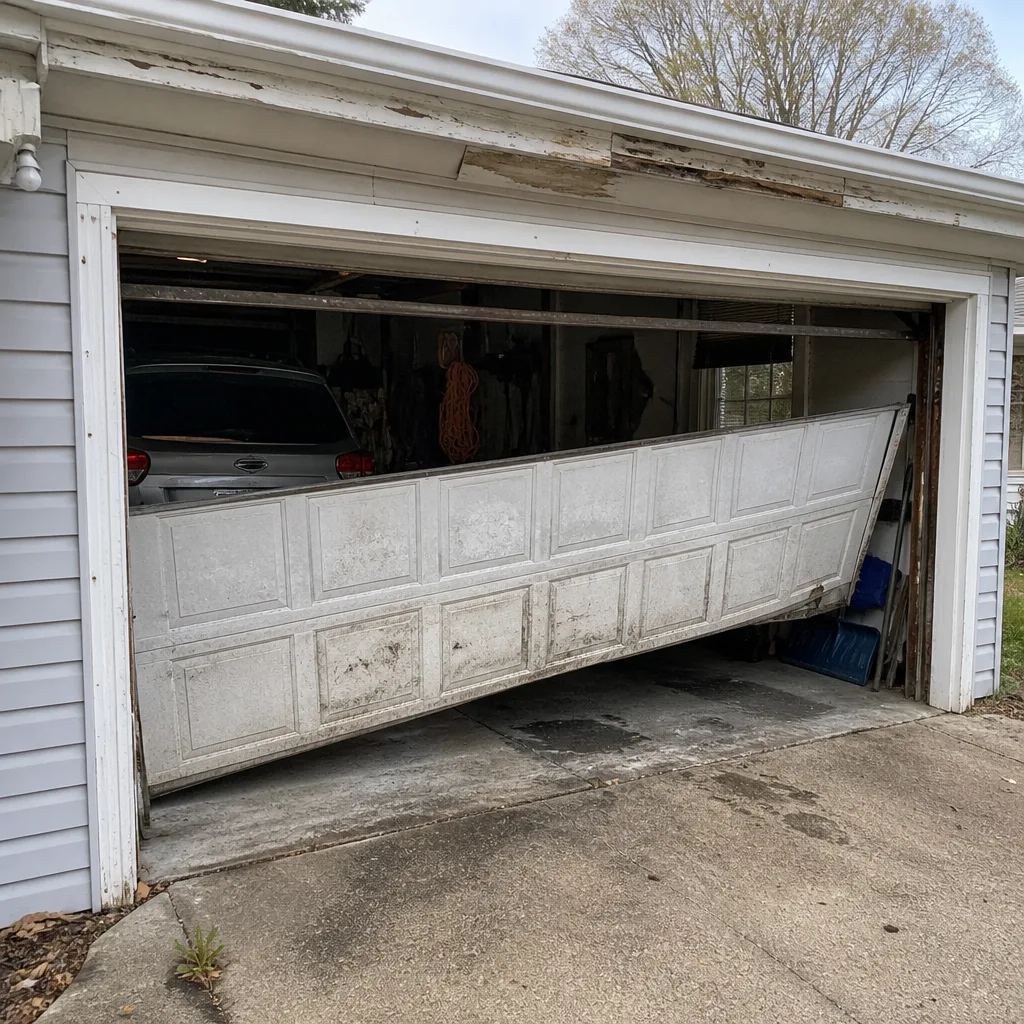 Before
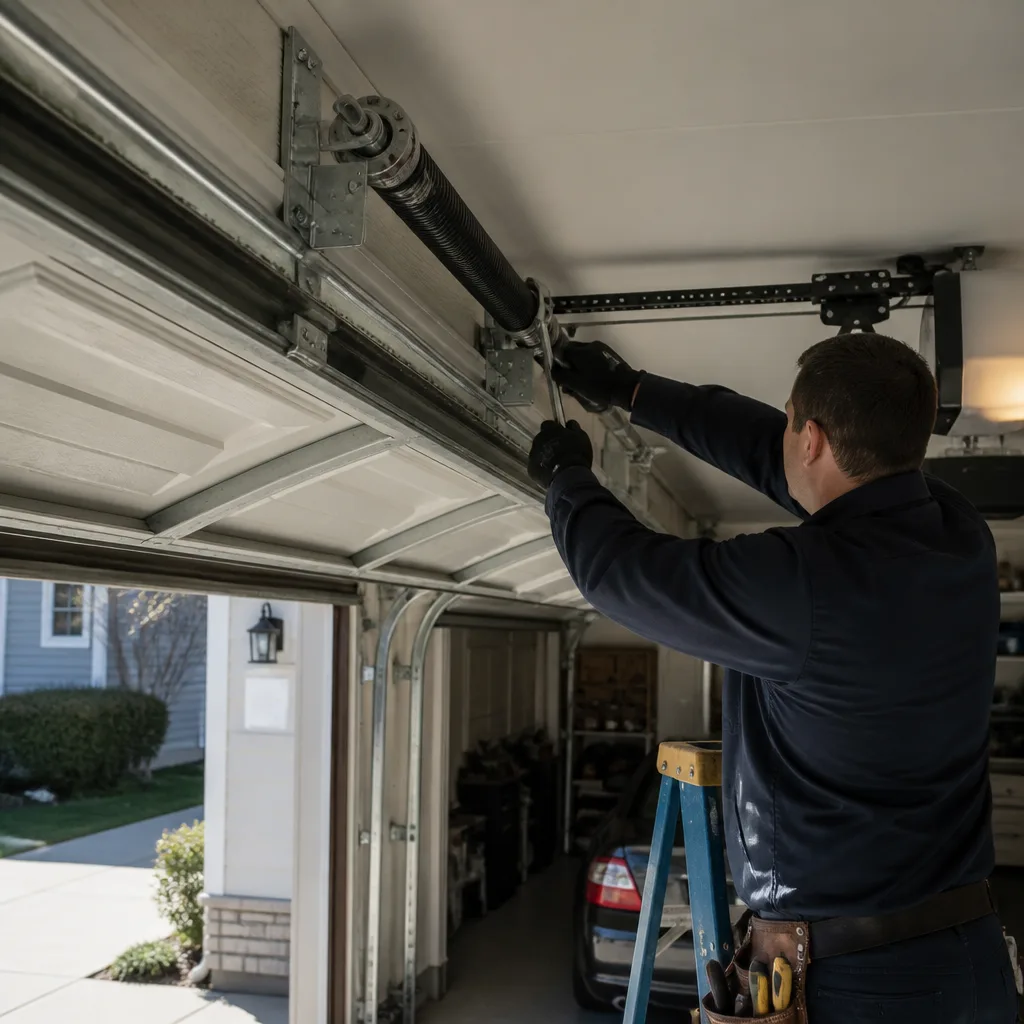 After
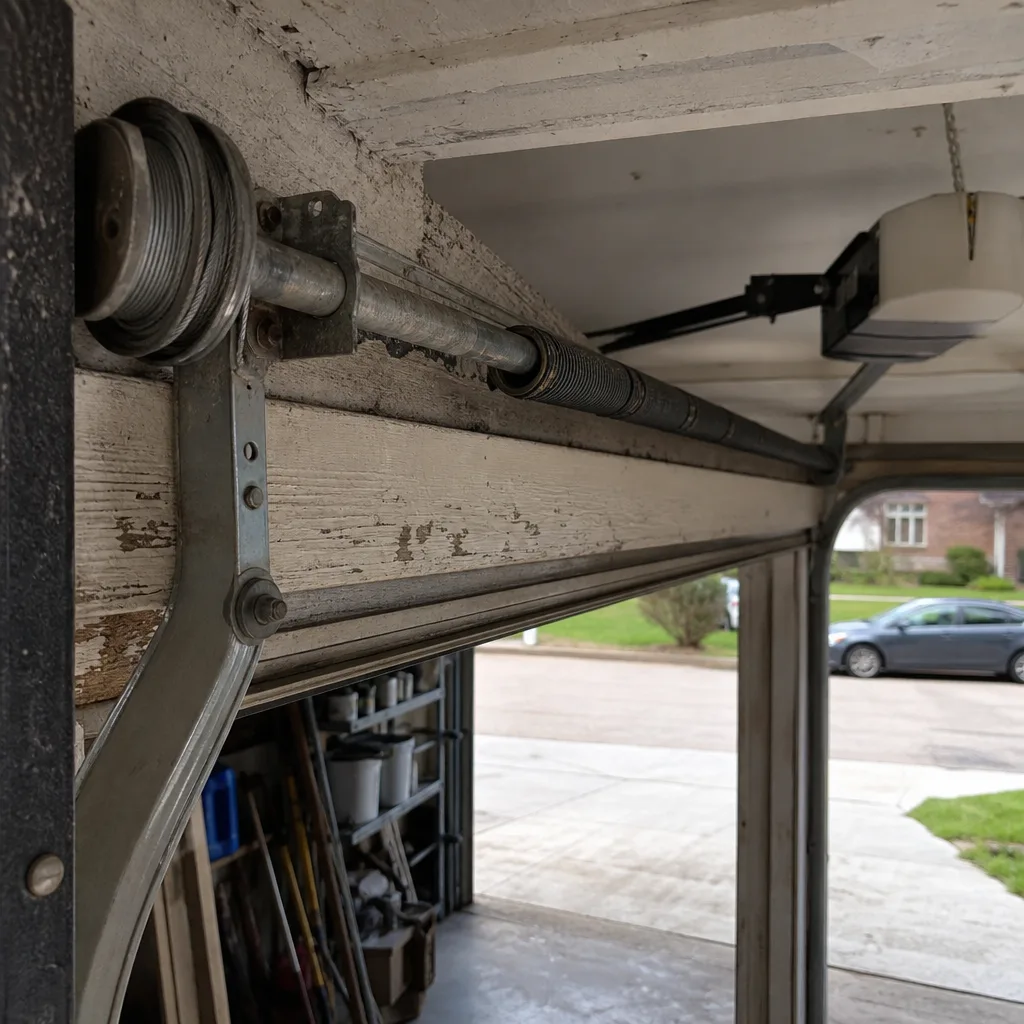 Before
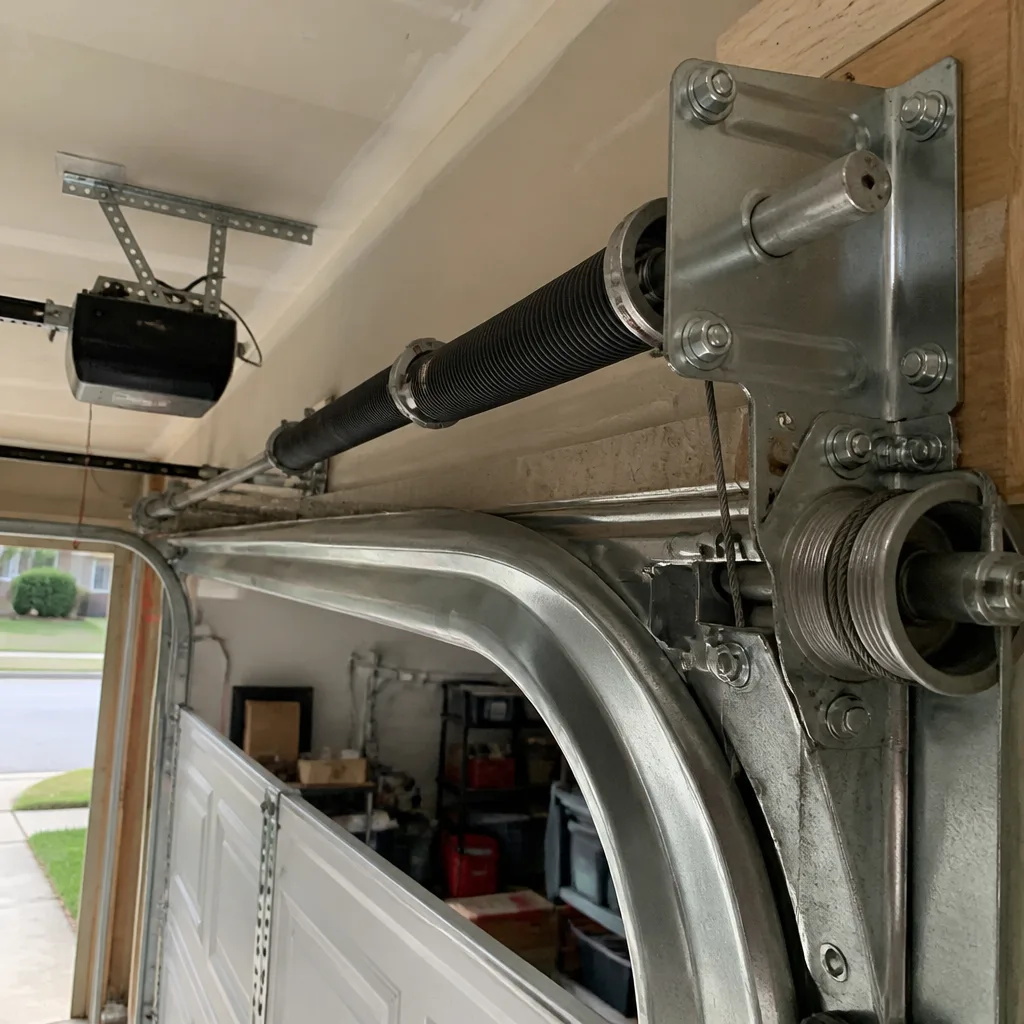 After
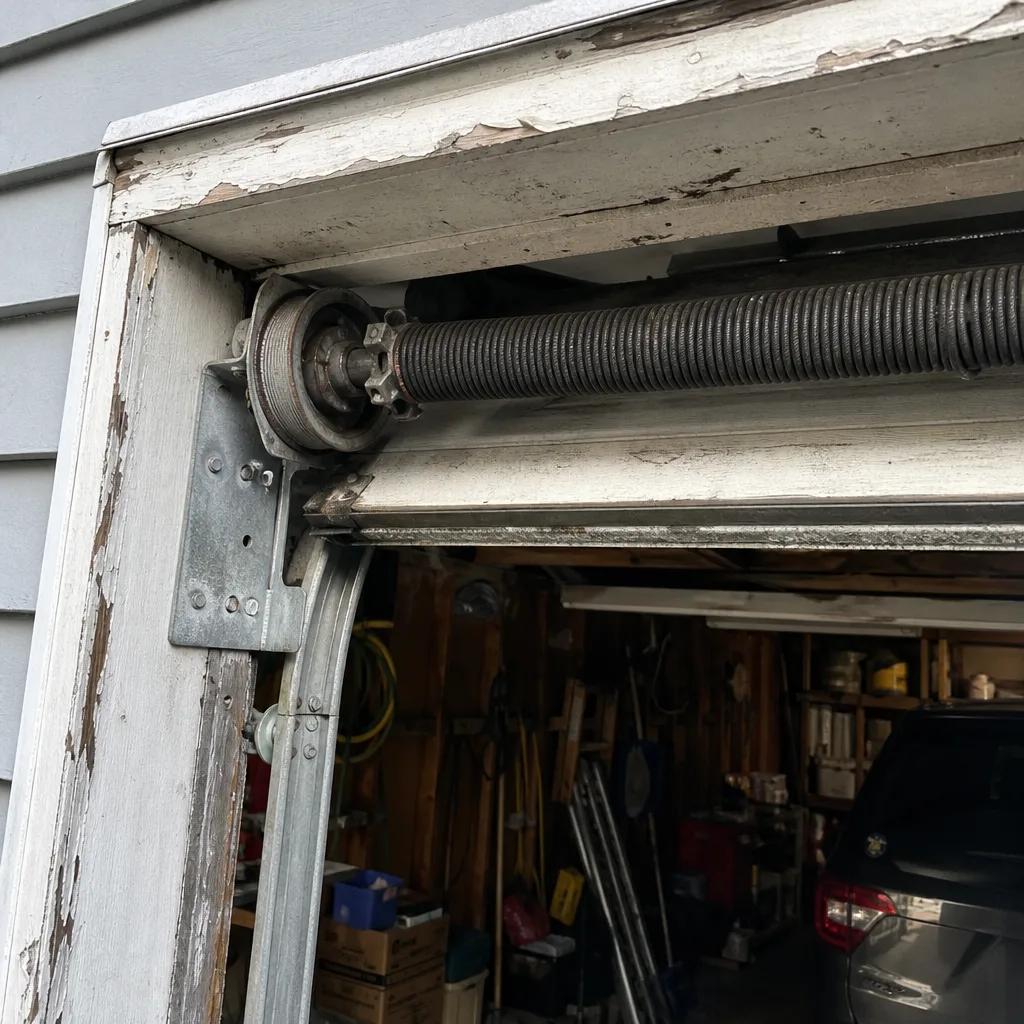 Before
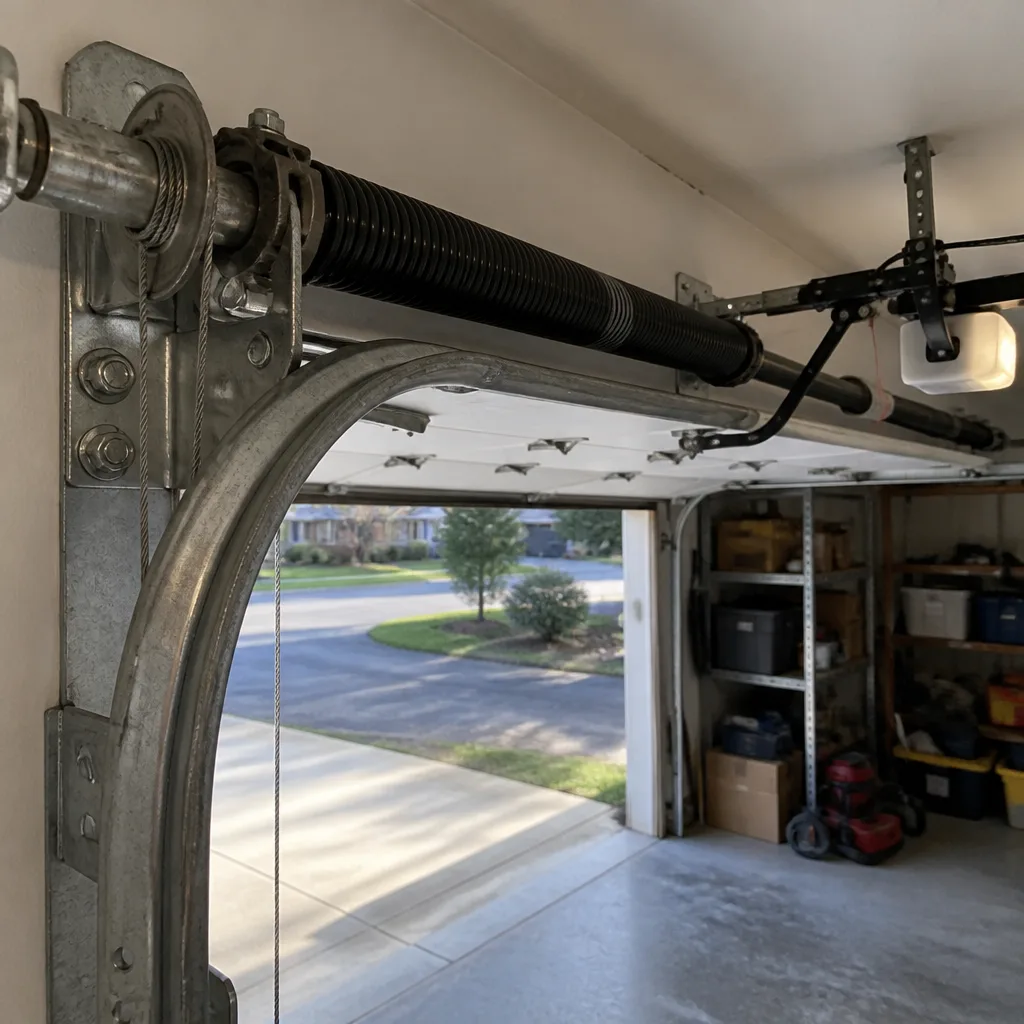 After
When to Call a Professional
Any of the stop-using signs means call a professional today: a snapped or fraying cable, a broken spring, a door off its tracks, or a bang followed by the door not moving. If you’re unsure how to choose a technician, read How to Hire a Garage Door Contractor in New York: A Step-by-Step Guide. Beyond those, call a technician for any warning sign you’ve noticed for more than two weeks. Doors don’t heal. A squeal that’s been there since last month and a spring that’s lost tension are both on a countdown to failure, and the repair is almost always cheaper and faster before the failure than after. Bramwell Garage Doors New York offers free estimates, answers the phone with a live person 24 hours a day, and shows up within the window we give you. Call (585) 669-6563 and we’ll send a background-checked, uniformed technician to your New York home, with a written price before any work starts.
Frequently Asked Questions
A grinding noise usually means the trolley carriage on your opener is worn, and the fix is a carriage replacement, typically $120 to $200 in New York. If the grinding comes from the side of the door rather than the center rail, check the rollers, which may have flattened bearings. Either way, addressing it early prevents the wear from spreading to the opener motor. Call (585) 669-6563 and we’ll diagnose it for free.
Yes. A loud bang from above the door is almost always a torsion spring breaking, and the door should not be operated afterward. The broken spring means the door’s full weight is now unassisted, which can overload your opener or cause injury if you try to lift the door manually. Call a professional immediately.
You’ll notice one of three things: the door feels heavier than it used to when you operate it manually, one side of the door hangs slightly lower than the other when closed, or the opener hesitates and struggles to lift the door. Any of these signals means the spring is losing tension and approaching the end of its rated cycles. Spring replacement in New York typically runs $150 to $280.
No. Garage door cables are under high tension and can cause severe injury if they release unexpectedly. If you see visible cable slack or fraying, stop using the door and call a technician. This is not a repair you can do safely without training and the right tools, and the risk is not worth the money you’d save.
In New York winters, cold temperatures make spring steel more brittle and lubricant thicker, both of which put extra strain on the opener. If the door opens halfway and stops, the likely cause is a spring losing tension in the cold, triggering the opener’s safety cutoff. Have the spring tension checked before it fails completely on a cold morning.
Most warning-sign repairs in New York run $80 to $280 depending on the component. A limit switch adjustment is on the low end around $80 to $150, a roller or bearing replacement runs $90 to $180, and a spring replacement runs $150 to $280. The key is getting the price in writing before work starts. Call (585) 669-6563 for a free estimate with a written quote on every job.
The Bottom Line
Garage doors are like any machine, they tell you what’s wrong before they stop working. The signal might be a grind in the motor, a sag on one side, a hesitation before the door moves, or a rust pattern at the cable bracket. None of these are random. Each one points to a specific component under stress, and each one is cheaper and safer to address before the failure than after. New York winters amplify the wear, so the warning signs you notice in October are most likely to become breakdowns in February. The practical takeaway: listen to your door, run the response-time test once a month, and when a sign appears, get a written diagnosis and price from a technician who will stand behind the work. That’s what Bramwell Garage Doors New York does on every job, and the Kingswell Guarantee puts it in writing.
Written by Marcus Ellery, Owner at Bramwell Garage Doors New York, serving New York since 2001. Browse more guides & resources on our blog.