
Last updated October 16, 2026
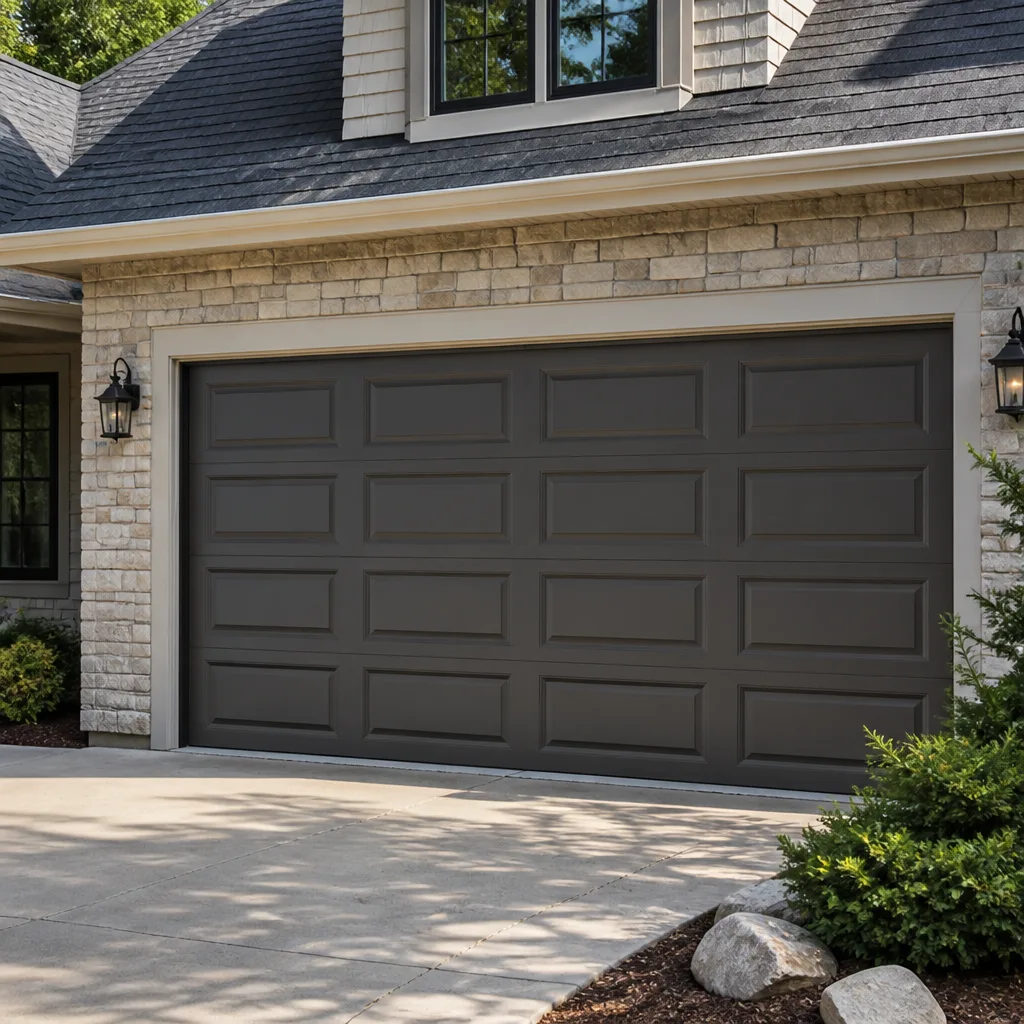 Raised-panel steel
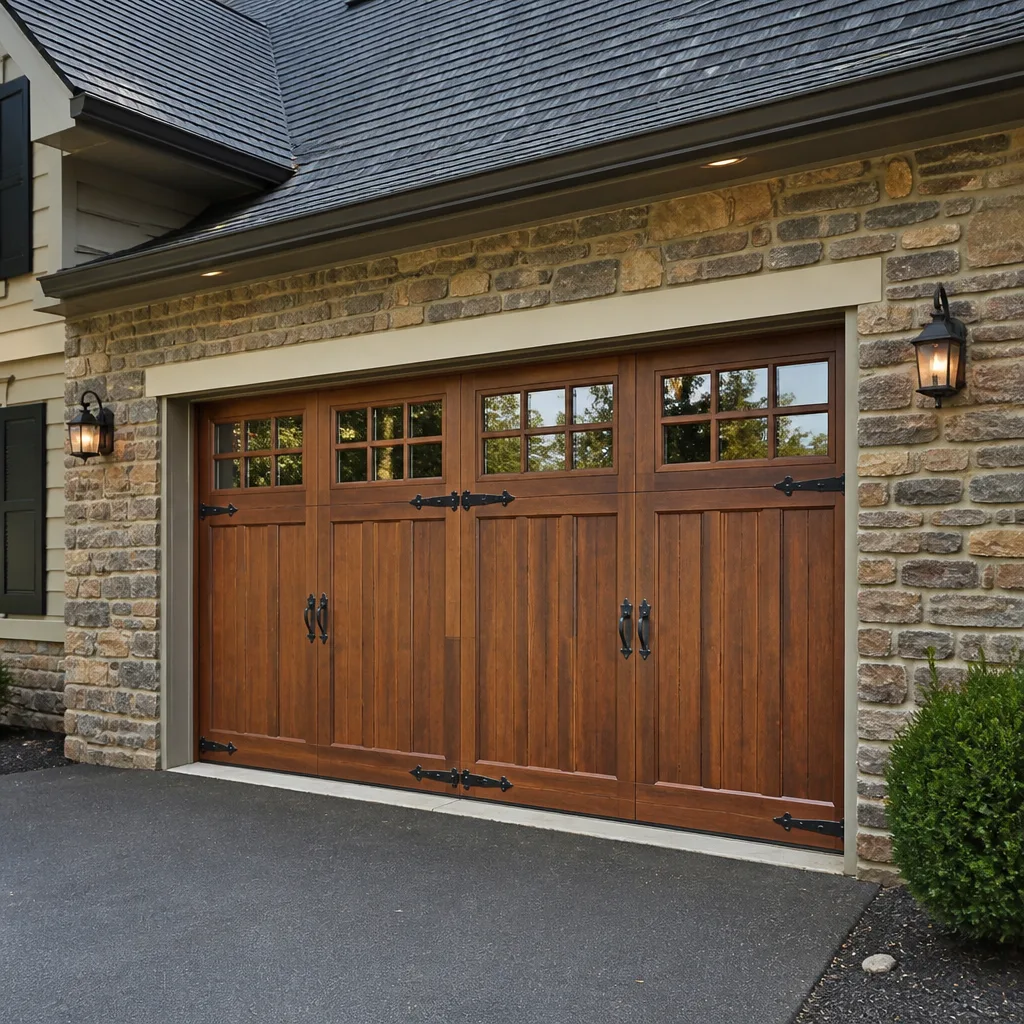 Carriage house
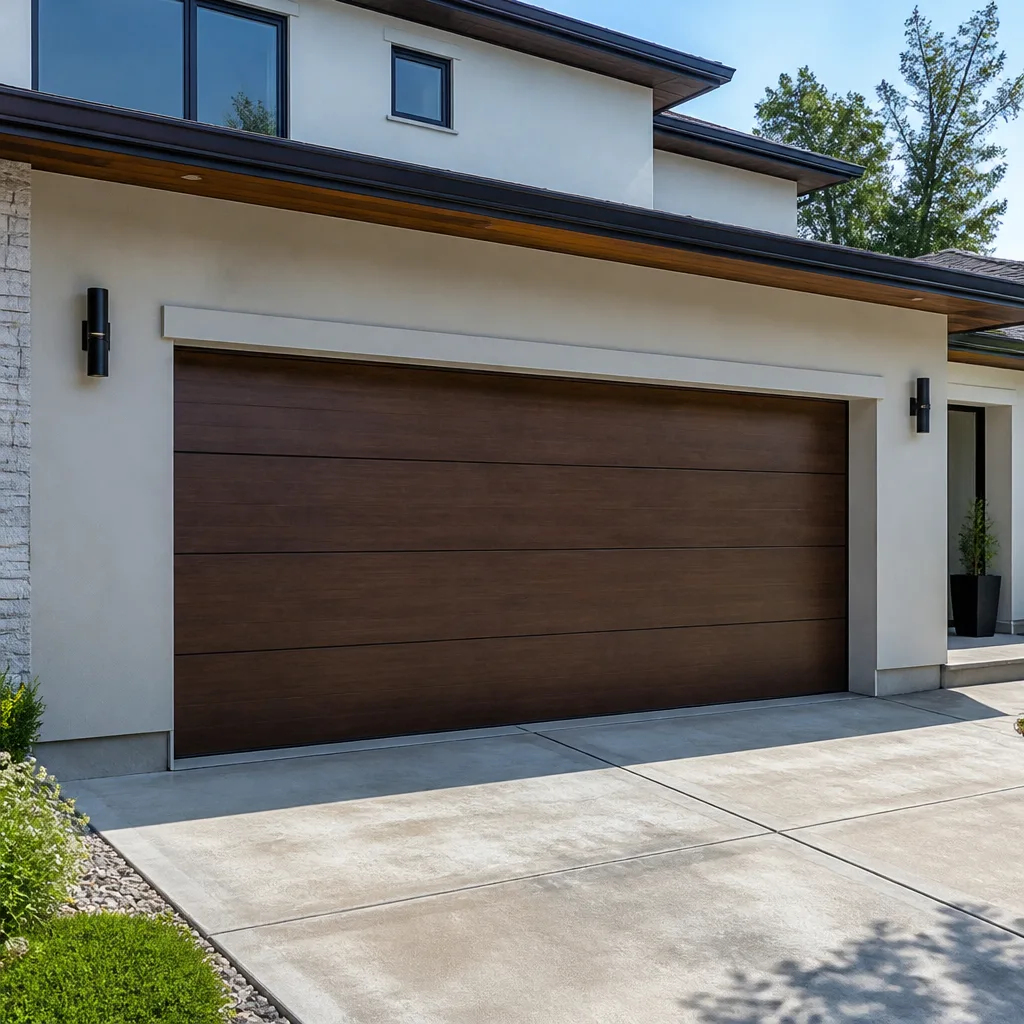 Modern flush
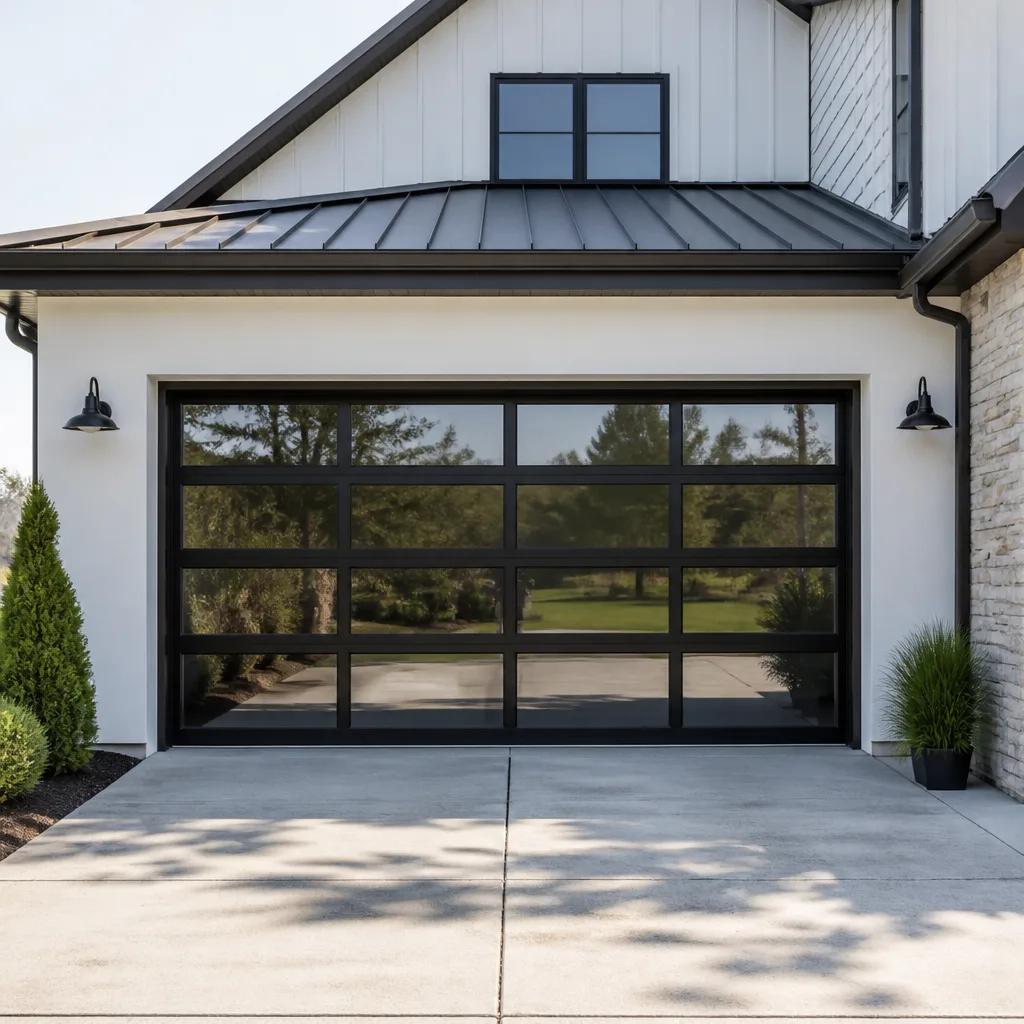 Full-view glass
 LiftMaster openers
 Chamberlain openers
Full 25-point door and opener safety check with every visit - springs, cables, rollers, tracks, and your LiftMaster or Chamberlain opener included
You get a price before we start. It does not change when the truck arrives.
Get your free estimateDIY vs Professional Garage Door: The New York Homeowner’s Decision Guide
A garage door torsion spring stores enough energy to break a wrist when it releases, yet most DIY guides treat spring replacement as a difficulty-level question rather than a safety question. That’s the wrong lens. The honest answer is that spring work is professional work regardless of how handy you are, while a handful of other garage door tasks are perfectly reasonable for a careful New York homeowner to handle. This guide draws that line task by task, using what we’ve learned from thousands of service calls across the five boroughs and the surrounding counties.
Quick Answer
Most garage door maintenance tasks fall into two categories: safe DIY work (lubrication, sensor alignment, weatherstripping, basic troubleshooting) and professional-only work (torsion spring replacement, cable tensioning, track realignment, opener installation on heavy doors). In New York, the decision also involves practical realities like limited workspace, parts sourcing without a trade account, the cost of a single tool rental, and what you can expect to pay for professional help. The short version: if the job involves a spring under tension, a cable bearing weight, or a door off its track, call a professional. Everything else, you can likely handle with basic tools and patience.
Styles & brands we work with
Table of Contents
- The Real Divide: Energy Storage, Not Skill Level
- What a Capable Homeowner Can Safely Do
- What Requires Professional Tools and Training
- Why New York Specifically Changes This Decision
- The Real Cost of a DIY Spring Attempt Gone Wrong
- How to Evaluate a YouTube Tutorial for Accuracy
- When Calling a Professional Is Actually Faster and Cheaper
- Common Mistakes to Avoid
The Real Divide: Energy Storage, Not Skill Level
Every garage door has components that store energy and components that simply move. The distinction matters more than whether you own a socket set. A torsion spring, the heavy coil mounted above the door that handles most of the lifting weight, can hold hundreds of pounds of torque even when the door is closed. When that spring snaps and releases, it does not ask about your confidence level or how many renovation projects you’ve completed. It releases all at once. Extension springs, found on older doors in neighborhoods like Forest Hills and Riverdale, stretch along the horizontal tracks and carry similar stored force. Cables under tension are another category entirely: a cable that slips while you’re working near it becomes a steel whip.
By contrast, the bottom roller brackets, the hinges, the sensors, and the weatherstripping are mechanical parts that move when the door moves but store no meaningful energy on their own. A homeowner who understands this divide can make sound decisions without needing a technician to tell them whether to pick up a wrench. The rule we give friends and family: if a part is under spring tension or cable load, do not touch it. If it’s bolted, clipped, or slid into place without stored force, it’s fair game with basic precautions.
This framing also explains why some YouTube tutorials are so misleading. A video can show a spring replacement in eight minutes and make it look like a casual weekend project. What the video doesn’t show is the winding bar slipping, the cone shattering, or the spring breaking a forearm. We have repaired doors in Brooklyn and Staten Island where a homeowner attempted a spring swap, got lucky enough to avoid injury, and then discovered the door wouldn’t balance because they guessed on the spring wire size. The door opened halfway and stopped. The opener burned out a month later straining against the wrong spring. That’s the realistic sequence.
What a Capable Homeowner Can Safely Do
There is real, legitimate DIY work on a garage door that saves money and extends the life of the equipment. These are the tasks we tell New York homeowners to go ahead and do themselves, without guilt and without calling us first, though our full maintenance checklist covers additional items worth tracking.
1. Lubricating the rollers, hinges, and springs
Twice a year is enough. Use a silicone-based spray or white lithium grease, not WD-40, which is a solvent and will strip the existing lubricant. Apply it to the roller bearings, the hinge pivots, and the torsion spring itself. This takes fifteen minutes, costs under ten dollars, and noticeably quiets a noisy door. In New York’s humid summers and salt-air neighborhoods near the water, more frequent lubrication helps prevent corrosion. We recommend doing this every spring and fall.
2. Aligning the photo-eye sensors
The sensors sit about six inches off the ground on each side of the door opening. If one gets bumped by a garbage can or a bicycle, the door will refuse to close or will reverse immediately. The fix usually involves loosening a wing nut, gently rotating the sensor until its indicator light turns solid, and retightening. No tools beyond your fingers in most cases. This is one of the most common service calls we get in New York, and nearly half of them could have been fixed in under five minutes at home.
3. Replacing weatherstripping and bottom seals
The rubber strip along the bottom of the door keeps out water, leaves, and cold air. In New York winters, a worn bottom seal can drop the temperature of an attached garage by fifteen degrees, which then leaches heat from the house. Replacement seals cost between twenty and forty dollars at a hardware store and slide into a track on the bottom of the door. No technical risk here. Cut to length with a utility knife.
4. Trusting the manual release
Every garage door opener has a red cord hanging from the trolley, the carriage that moves along the rail. Pulling it disconnects the door from the opener so you can lift the door by hand. This is a safety feature, not a repair. If the power goes out during a New York storm, pull the cord down and toward the door, then lift the door manually. When the power returns, the opener will reconnect automatically on the next cycle. This is safe for any homeowner to use and worth practicing once so you know how it feels.
5. Tightening visible nuts and bolts
Garage doors vibrate hundreds of times per month. Bolts loosen. Walk around the door with a socket set every few months and snug anything that’s visibly loose on the hinges, brackets, and track mounts. Do not overtighten, and do not touch anything connected to a spring or cable. If a bolt keeps loosening, that signals a deeper issue worth having checked.
What Requires Professional Tools and Training
These are the tasks where the line is not blurry. Each one involves stored mechanical energy, precision calibration, or specialized equipment that makes DIY genuinely unsafe or functionally impractical.
1. Torsion spring replacement
Torsion springs are wound under extreme tension and require winding bars, not screwdrivers or pry bars, to install and adjust safely. The springs are sized by wire gauge, inside diameter, and length, and must be matched to the door’s exact weight. An undersized spring fails early. An oversized spring lifts too fast and slams the door. Most torsion spring replacements in New York run $150-$280, parts and labor included, depending on the door. For that price, you get a spring that’s matched, wound correctly, and balanced. We have never met a homeowner who thought the savings justified the risk after seeing what a spring does when it lets go.
2. Cable replacement and tensioning
The cables run from the bottom brackets up to the drums at the top of the door. They carry the door’s weight whenever the spring system is working. A frayed cable can snap without warning, and a cable that slips while you’re working near it becomes a serious hazard. Replacing cables requires unwinding the spring tension first, which loops you back to the danger of the springs. This is not a standalone repair. It is a system repair.
3. Track realignment
The tracks guide the rollers and hold the entire door in place. If a track is bent or misaligned, the door can bind mid-travel and come off its tracks entirely. A door that comes off the tracks is dangerous because it can fall suddenly and unpredictably. Realigning tracks requires understanding how the door’s balance, spring tension, and track geometry interact. It also sometimes requires replacing the track section, which means unbolting from the wall and re-hanging it square and plumb.
4. Opener installation on heavy doors
Installing a new opener on a lightweight single-car door is within reach for a careful DIYer. On a heavy wooden door, a double-wide door, or any door with questionable spring balance, the opener is working against forces it wasn’t meant to handle. A door that’s out of balance can burn out a brand-new opener motor within months. Professional installation includes a balance check and spring adjustment if needed, which is the part most DIY instructions skip entirely.
5. Panel replacement on torsion-spring doors
Replacing a single damaged panel often requires releasing spring tension, removing multiple panels to reach the damaged one, and reassembling everything in sequence. It’s a two-person job at minimum and a four-hour job for a technician with experience. The labor cost is real, but attempting it solo while a spring holds tension is precisely the scenario that sends people to urgent care.
Why New York Specifically Changes This Decision
New York is not a suburb of Houston or Phoenix. The physical reality of garages here, along with local permits and code requirements, changes what DIY work looks like and what it costs to get wrong. Attached garages in Queens and Brooklyn are often tight, with eighteen inches between the car and the wall. Winding a torsion spring requires two-foot winding bars and the room to swing them. In a narrow garage, there may not be a safe body position available at all.
Multi-unit buildings add another layer. If you own a condo or co-op with a shared garage, your governing documents may require licensed and insured contractors for any mechanical work. Doing the work yourself could void your insurance or leave you personally liable if a neighbor’s car gets damaged by a falling door. That’s not an abstract concern in a city where a parking spot costs more than a car.
Parts sourcing is another real issue. The big box stores in New York carry a limited selection of springs, cables, and rollers, often in the wrong sizes or generic quality. A trade account through a regional supplier like Bramwell gets you the exact spring specification for your specific door, often same-day in New York. If you buy a “universal” spring off a shelf in Long Island City, you are guessing at the most important variable in the entire system.
Then there’s the tool question. Winding bars are inexpensive. The expensive part is everything else: a proper torque wrench, a full socket set in the right sizes, a level long enough to check track alignment, and a second person who actually shows up. For a one-time job, buying all that or renting it per hour rarely makes financial sense when a professional New York technician arrives with the complete kit on the truck.
Finally, there’s the delivery window reality. In New York, a residential delivery can take anywhere from two days to two weeks depending on the supplier and the borough. If you order springs and then discover mid-repair that the size is wrong, you are staring at another week with the door disabled. We have had customers in the Bronx pay triple in downtime costs because a wrong spring sat in a hallway while the door hung open.
The Real Cost of a DIY Spring Attempt Gone Wrong
Forget the worst-case injury scenario for a moment, not because it’s unimportant, but because there’s a more common and less discussed outcome: the repair that holds for three weeks and then fails. The realistic cost of a DIY spring job gone wrong is not a hospital bill. It’s a misaligned replacement that damages the opener or the track within sixty days, and then a professional repair on top of the DIY parts you already bought.
Here’s how that plays out in New York. A homeowner buys a pair of torsion springs online for about sixty dollars. They borrow winding bars or buy them for twenty. The installation takes an afternoon and seems to work. But the spring wire size is slightly off, because the door is a Clopay model with a specific weight distribution, and the generic spring was rated by diameter alone. Within a month, the opener is straining. The trolley, the carriage that moves along the rail, is wearing against the rail. By week six, the opener has a stripped gear or a burned motor. The professional repair now includes two new properly sized springs and possibly an opener replacement. Total cost: far more than the original spring repair would have been, and the door was out of commission twice as long.
There’s also the safety-cable issue on extension spring doors. If you watch a video that shows extension spring replacement but doesn’t show the installation of safety cables through the springs, that video was made by someone who doesn’t understand New York building codes. Those cables are what keeps a broken spring from flying across the garage. Skipping them because the video didn’t mention them is not a shortcut, it’s an uninstalled safety device.
We have seen this sequence enough times in New York to describe it without exaggeration. The DIYer doesn’t get hurt, which is good. They get frustrated, then they get a bill that’s higher than it would have been if they’d called first. Marcus Ellery has said more than once that the most expensive garage door repair in New York is the one that was attempted twice.
How to Evaluate a YouTube Tutorial for Accuracy
There are genuinely excellent garage door tutorials on YouTube, made by working technicians who film real jobs and explain each step. There are also videos made by someone who replaced one spring on their own door, once, and considered themselves qualified to teach. Here are three technical details that reveal which kind you’re watching.
- Does the video mention spring wire size and door weight? A real technician will measure the door, look at the existing spring’s markings, or weigh the door before selecting a replacement. A video that says “just match the old spring” without explaining how to read the color code or measure the wire gauge is skipping the single most important variable. If the video doesn’t mention wire size, inside diameter, or door weight, close it.
- Does the video show the technician using winding bars of the correct diameter? Winding bars are solid steel rods that fit into the winding cone, the threaded collar on the end of the spring. A real technician uses bars that fit snugly. A video that shows screwdrivers, Allen wrenches, or rebar as substitutes is demonstrating the exact mistake that causes spring-cone failures and injuries. Close it immediately.
- Does the video address what happens if something goes wrong? The best tutorials include a segment on what to do if the door binds, if the spring doesn’t set correctly, or if the bars slip. A video that presents the job as a smooth, uninterrupted sequence with no contingencies was either heavily edited or made by someone without enough experience to know what can go wrong.
One more check: look at the comments. If a real technician responds to questions in the comments with specific answers about spring diameters and door weights, that’s a good sign. If the creator ignores technical questions or gives vague responses, the video is entertainment, not instruction.
When Calling a Professional Is Actually Faster and Cheaper
There’s a common assumption that DIY always saves money. On garage door work, that assumption breaks down quickly in New York for several specific reasons. A professional New York technician arrives with a truck stocked with springs, cables, rollers, hinges, brackets, and openers in the common sizes and brands: LiftMaster, Chamberlain, Genie, Clopay. That means the job gets done in one visit. A DIYer in New York waits for parts to ship, pays retail prices, and often discovers mid-job that something else is worn out and needs a parts store run.
Tool rental is another hidden cost. A proper torsion spring job requires winding bars, a socket set, a level, and often a second person. If you rent tools, you’re paying by the hour and racing the clock. If you buy them, you’re paying for tools you’ll likely never use again. Factor in the cost of a wrong part, a second order, and the downtime of a garage door that won’t open, and the professional quote starts to look like the budget option.
In New York specifically, there’s also the time cost. The average homeowner researching spring specs, ordering parts, watching tutorials, and doing the job for the first time will spend a full weekend, often more. A professional crew arrives, completes the work in under two hours, and provides a written guarantee. If your time is worth anything at all, and if you factor in the cost of getting it wrong, calling Garage Door Spring Repair in New York is frequently the cheaper option. That’s not a sales line. It’s arithmetic.
The same logic applies to Garage Door Repair in New York on doors with multiple issues. When a door has a broken spring and a worn cable, the DIY approach treats them as two separate projects. A technician treats them as one connected system and fixes both in the same visit for a single written price. That price is agreed before any work starts, which means no cost surprises at the end. We operate that way at Bramwell Garage Doors New York home, and it’s the standard we believe every New York homeowner should hold their contractor to.
Common Mistakes to Avoid
- Using the wrong lubricant on a Genie or LiftMaster opener chain. Household oils attract dust and gum up the chain over time. Use a silicone-based lubricant or the specific product recommended in your opener’s manual. The lubricant question is the single most common mistake we see in New York garages.
- Disconnecting the manual release while the door is open. If the door is balanced, it should stay put. If it’s out of balance, which is often the case with a worn spring, the door will slam to the ground the moment you pull the cord. Always test the release with the door closed unless you know the door is properly balanced.
- Replacing just one spring on a two-spring door. Both springs wear at the same rate. If one breaks, the other is near the end of its life. Replacing only the broken one means you’ll be back in the same situation within months, and you’ll pay for the labor twice.
- Buying a replacement spring by “door size” instead of door weight. A seven-foot by nine-foot door can weigh anywhere from 90 to 250 pounds depending on the material. Two doors that look identical can require completely different springs. This is the mistake that leads to a door that won’t open or an opener that burns out early.
- Ignoring a slow or uneven door because it “still works.” A door that hesitates or moves unevenly is telling you something: a bearing is failing, a spring is weakening, or a track is out of alignment. Waiting until it fully stops working means waiting until a part fails catastrophically, often while the door is half open.
- Assuming the opener is the problem when the door won’t move. More often than not, the opener is fine and the spring is broken, which means the opener is trying to lift a door that suddenly weighs triple its rated load. Replacing the opener without checking the spring is the most expensive misdiagnosis in garage doors.
- Working alone on any door that requires lifting panels or holding tension. Besides the safety risk, there’s a practical one: a door panel is awkward and heavy, and nobody wants to explain to the ER nurse that they were pinned by a garage door panel in their own driveway.
See the difference
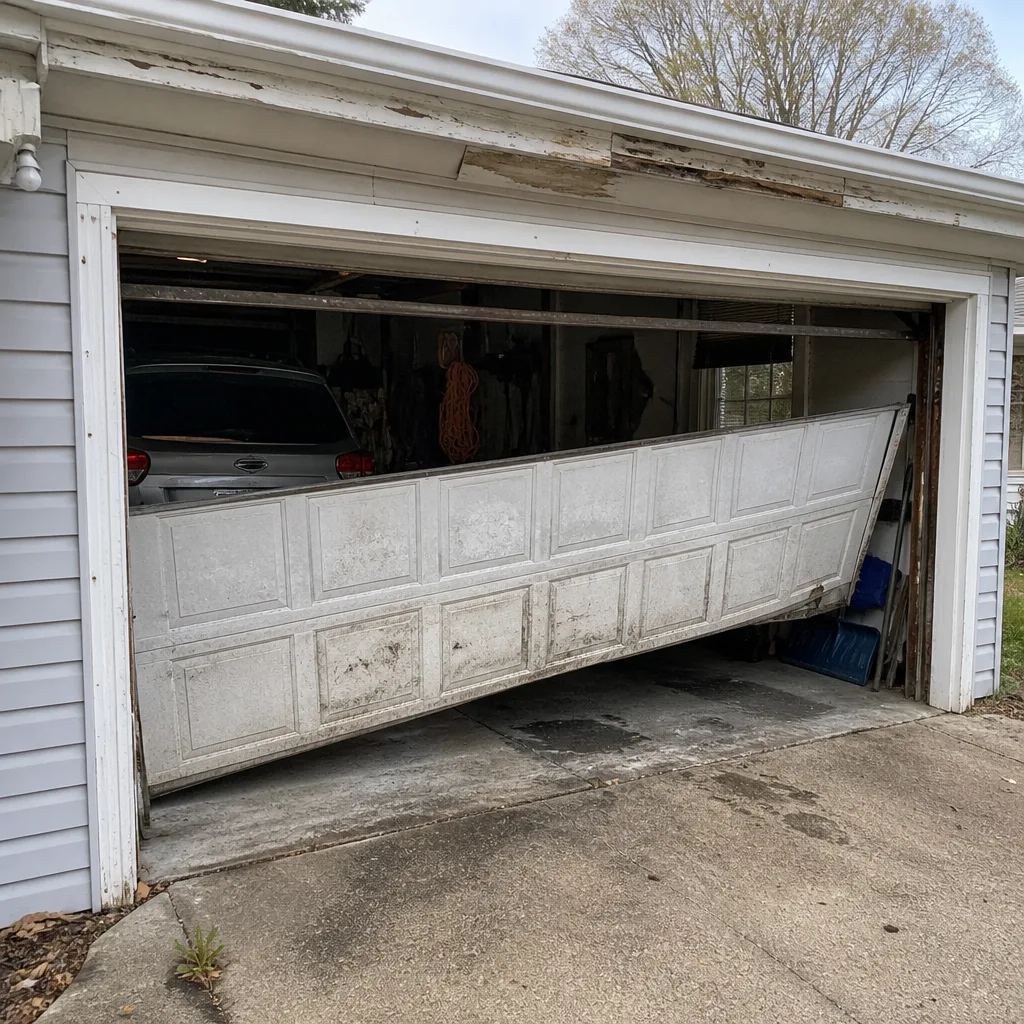 Before
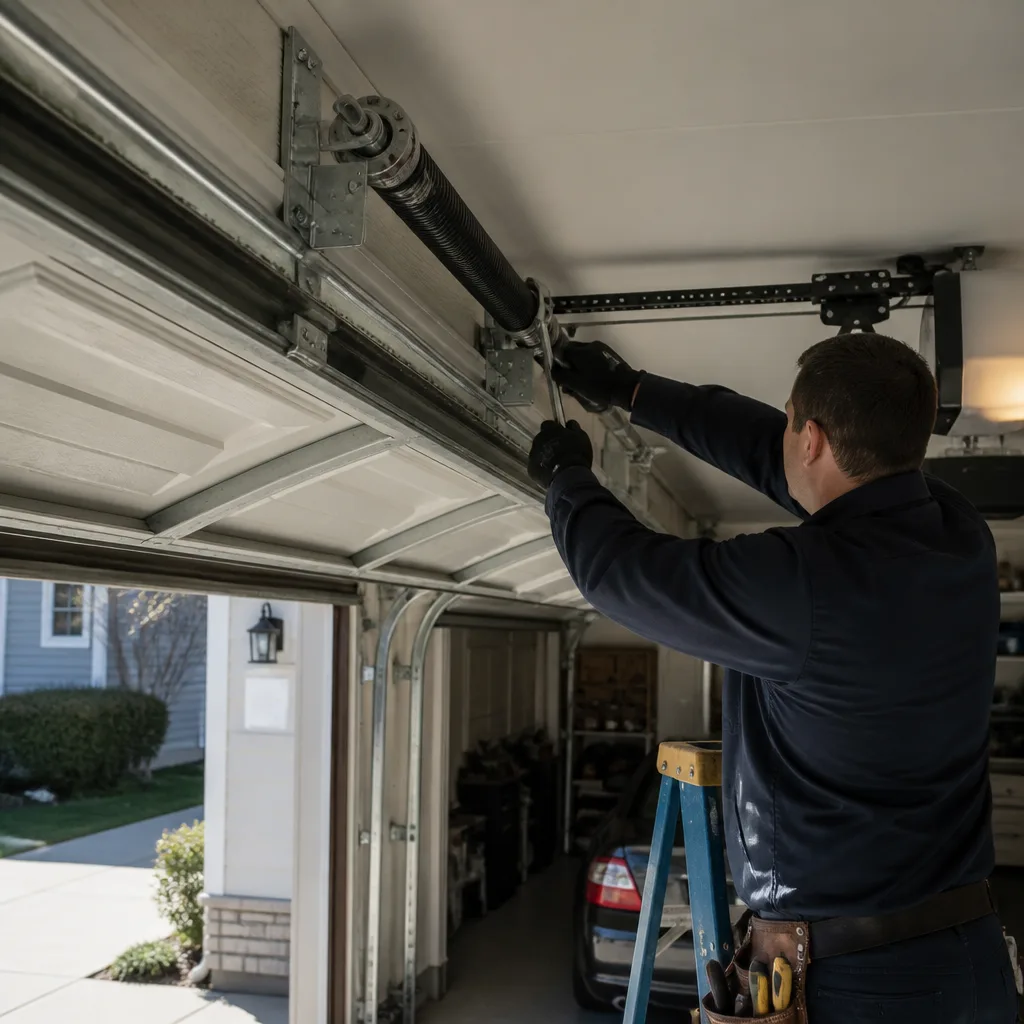 After
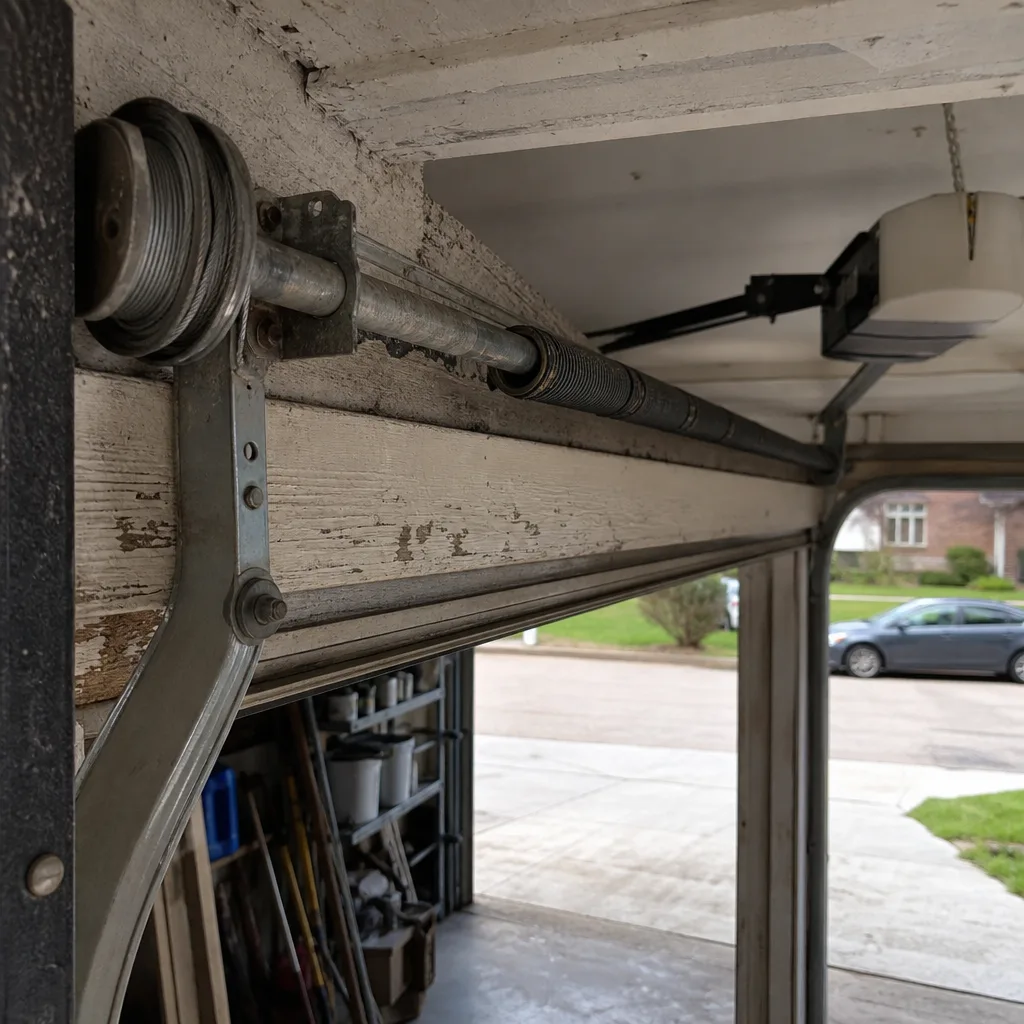 Before
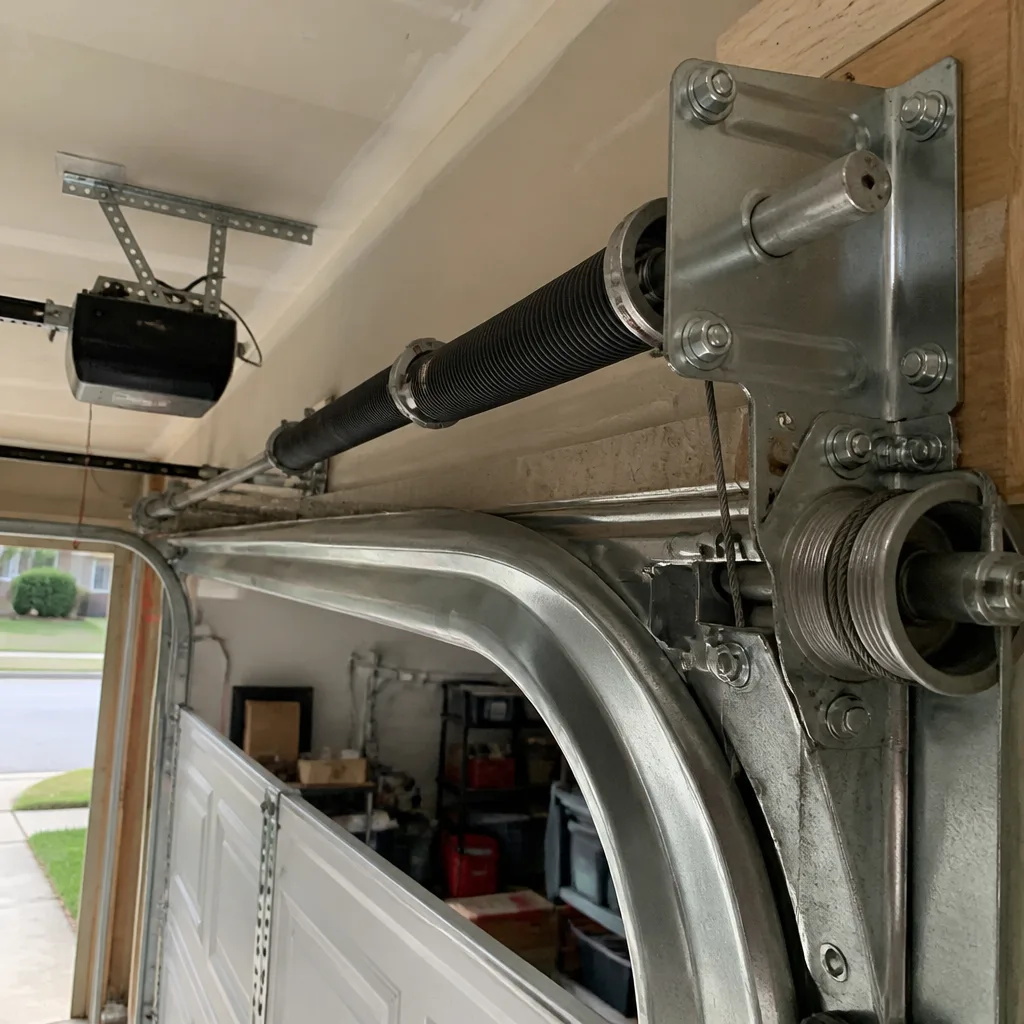 After
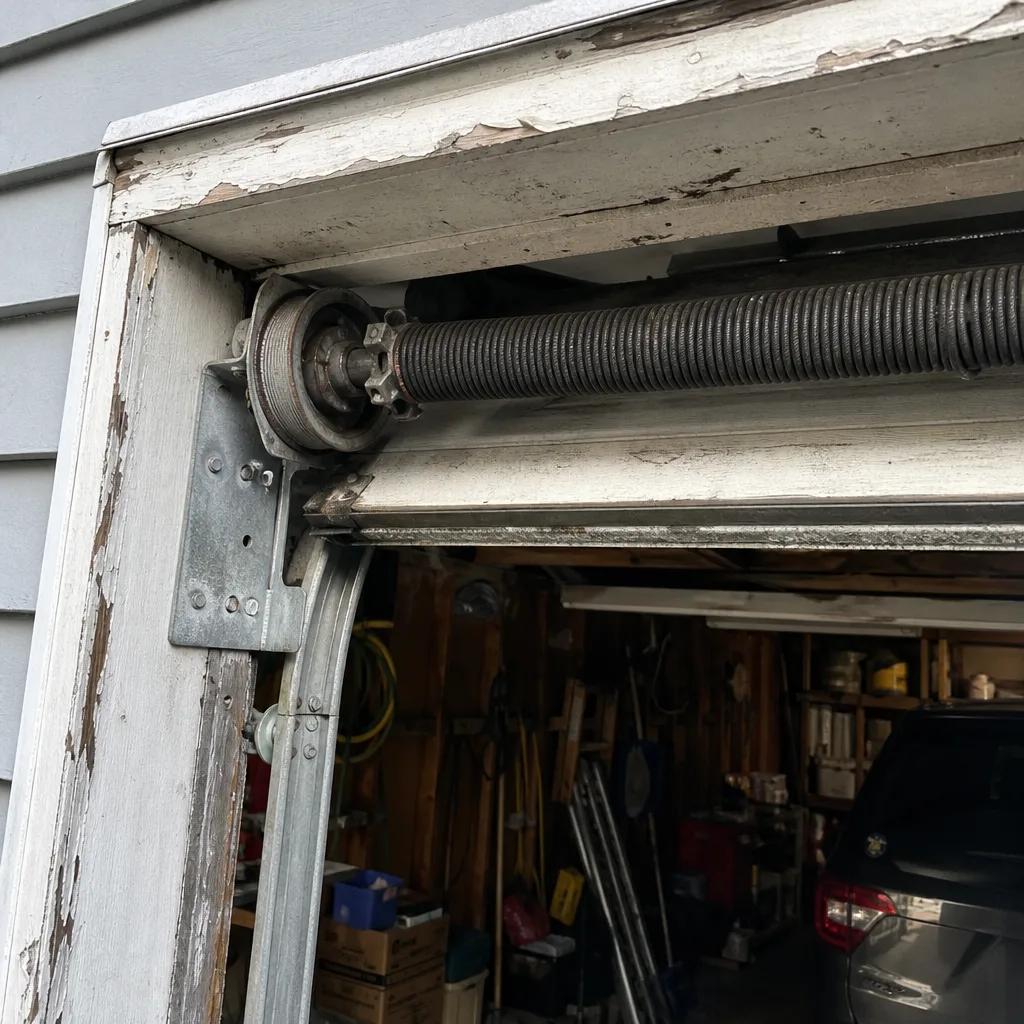 Before
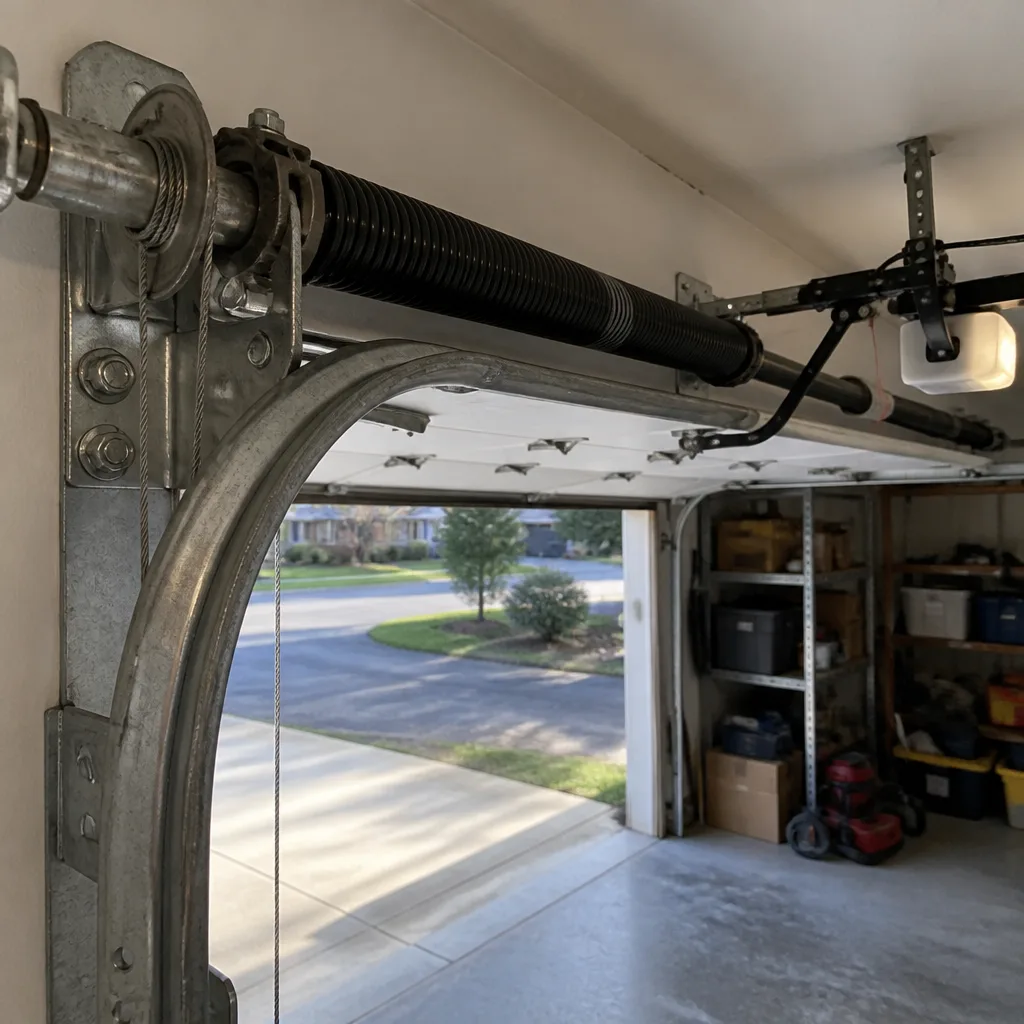 After
When to Call a Professional
Call a professional if the door has a broken spring, a frayed or snapped cable, a bent track, or a panel that’s come off the hinges. Call if the door is heavy to lift by hand, which means the spring system isn’t working. Call if you have a multi-unit building, a shared garage, or any situation where another person’s property could be damaged by a failed repair. Call if you’ve already tried a fix and the door is worse than before, or if you’re not certain what’s wrong. Bramwell Garage Doors New York offers free estimates across New York, with a live person answering the phone 24/7, and every repair covered by the 365-Day Done Right Promise. For more guides & resources, visit our blog. Call (585) 669-6563 and you’ll get a straight answer about whether the job is worth a pro, even if the answer is that you can do it yourself.
Frequently Asked Questions
No. Torsion springs store enough energy to cause serious injury, and the winding and unwinding process requires specific tools and training. This is the one garage door repair where we will always, without hesitation, tell a New York homeowner to call a professional. The cost of a professional spring replacement, typically $150-$280 in New York including parts and labor, is less than most injury-related costs, and the job is done in under two hours.
You can safely lubricate the rollers, hinges, and springs with a silicone-based lubricant twice a year, align the photo-eye sensors, replace the bottom weatherstripping, and tighten visible nuts and bolts. These tasks require no specialty tools and involve no stored mechanical energy. Use the manual release cord any time you need to disconnect the opener from the door, such as during a power outage.
Most common repairs in New York run between $150 and $400, with spring replacement at the lower end of that range and opener or panel replacement at the higher end. The key factor is that a written price should be given before any work begins. If a company won’t put the number in writing before starting, that’s a red flag. Call (585) 669-6563 for an exact quote on your specific door and situation; estimates are free.
Look for three things: the video mentions spring wire size and door weight, the technician uses proper winding bars rather than screwdrivers or rebar, and the video addresses what to do when something goes wrong. A video that skips any of those three is not reliable. Also check the comments for specific, technical answers from someone who clearly works on doors for a living.
This almost always means the torsion spring is broken and the opener is trying to lift the full weight of the door by itself. The opener motor is running, but the door is too heavy to move. Continuing to run the opener in this condition will burn out the motor or strip the gear. The fix is a spring replacement, not an opener replacement, and it’s a professional job. See our New York garage door spring repair guide for details.
On a lightweight single-car door with good spring balance, a careful DIYer can install a Chamberlain or LiftMaster opener in about four hours with basic tools. On a heavy wooden door, a double door, or any door with unknown spring condition, professional installation is the better call. If you’d rather have it done right the first time with a written guarantee, our New York installation service includes a free measure and a written price before any work begins.
The Bottom Line
The DIY-versus-professional decision on garage doors is not about how handy you are. It’s about whether the part you’re touching stores mechanical energy. Springs, cables, and loaded tracks are professional work, full stop. Lubrication, sensors, weatherstripping, and basic tightening are homeowner work, and doing them yourself saves real money over the life of the door. In New York, the decision is also shaped by tight workspaces, insurance requirements in multi-unit buildings, and the cost of returns and downtime when a guess goes wrong. When in doubt, call a professional who will give you a straight answer and a written price. That’s how we’ve operated at Bramwell Garage Doors New York since 2001.
Written by Marcus Ellery, Owner at Bramwell Garage Doors New York, serving New York since 2001.