
Last updated October 16, 2026
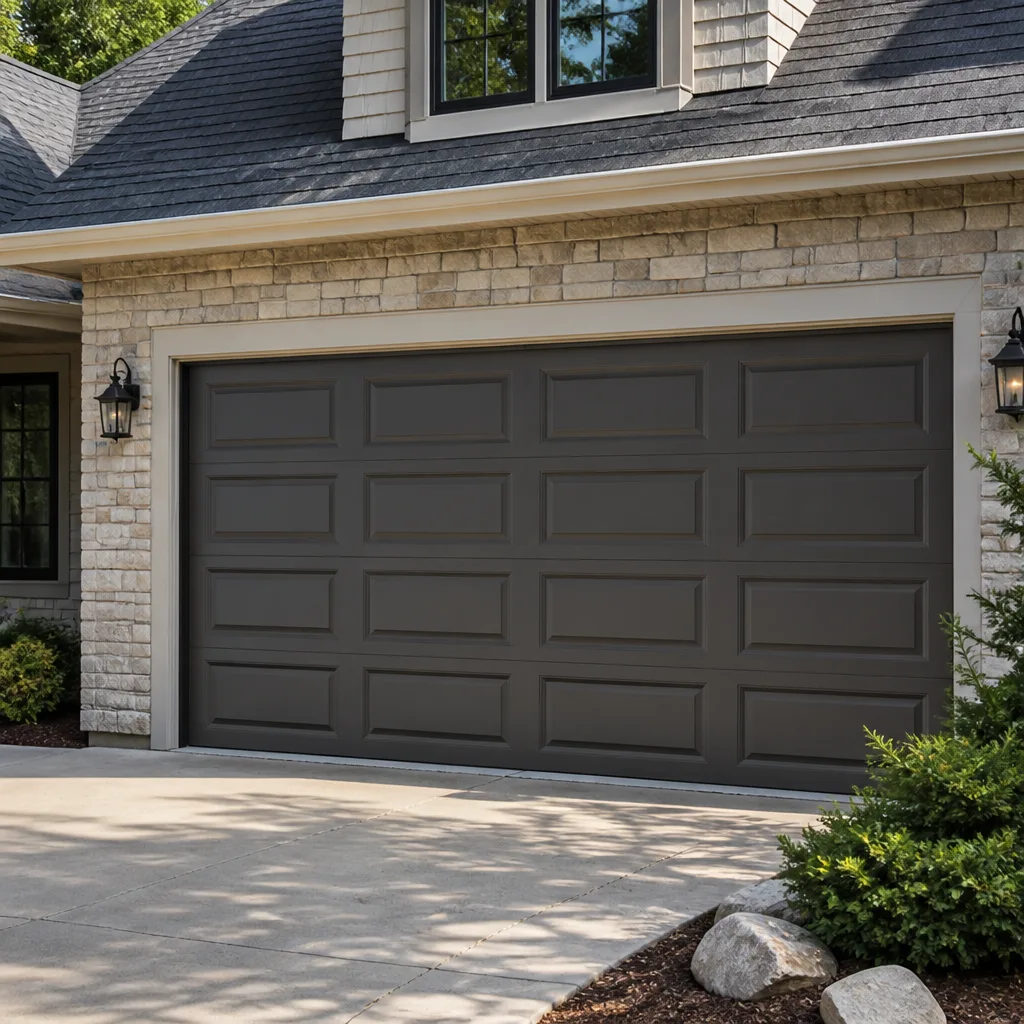 Raised-panel steel
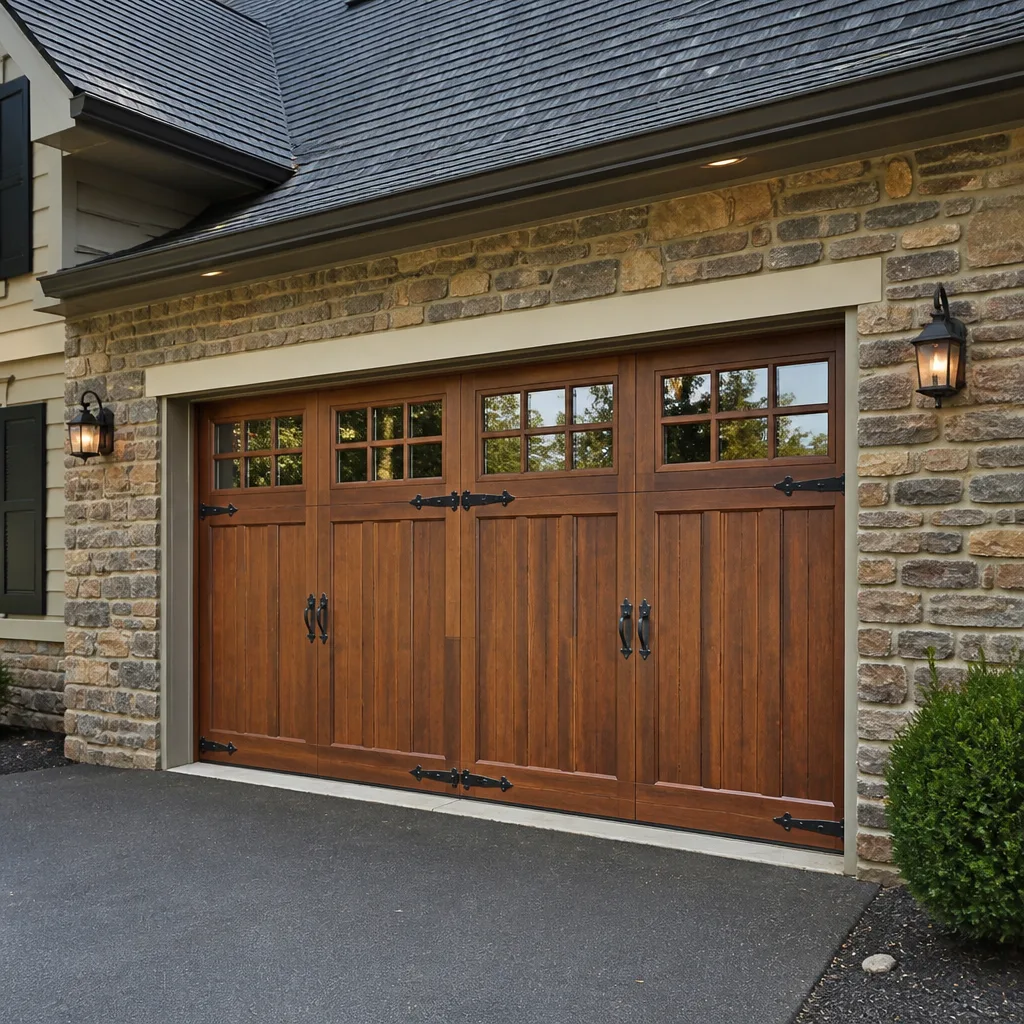 Carriage house
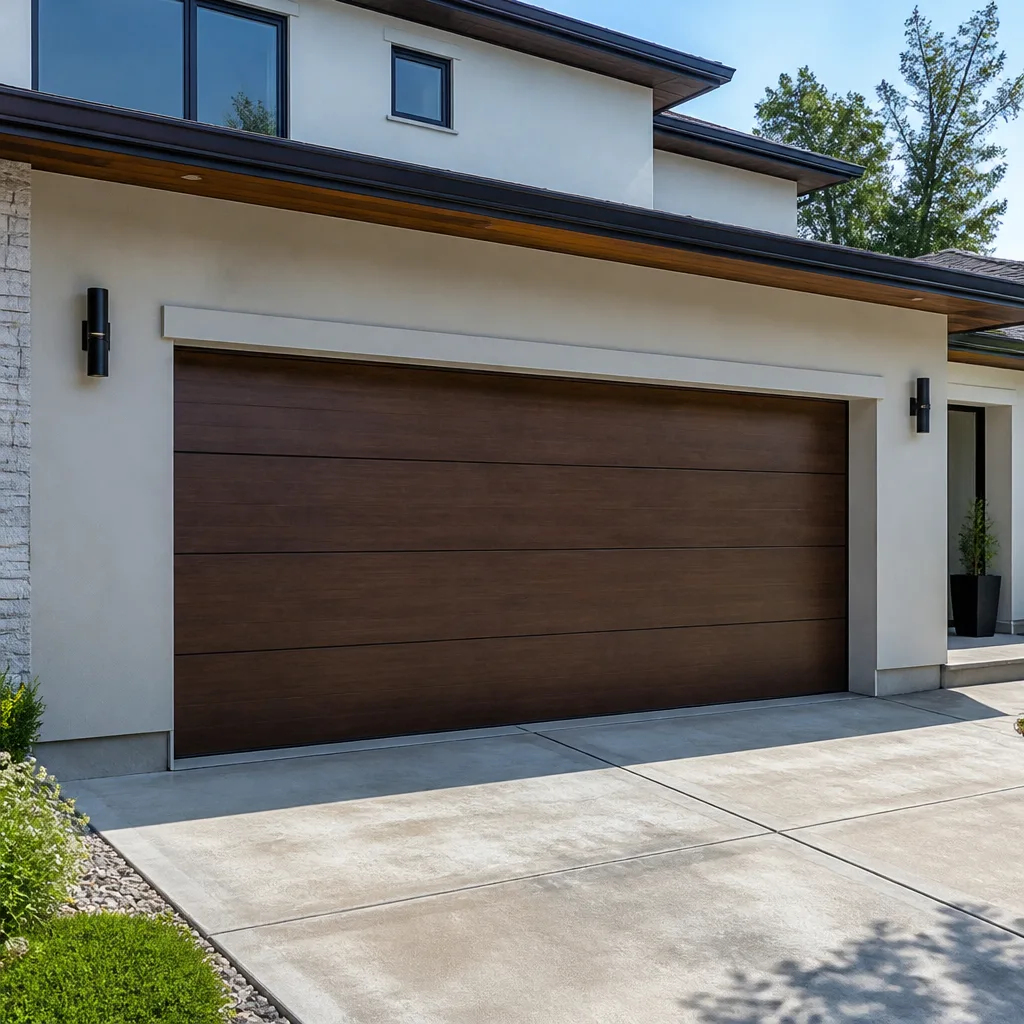 Modern flush
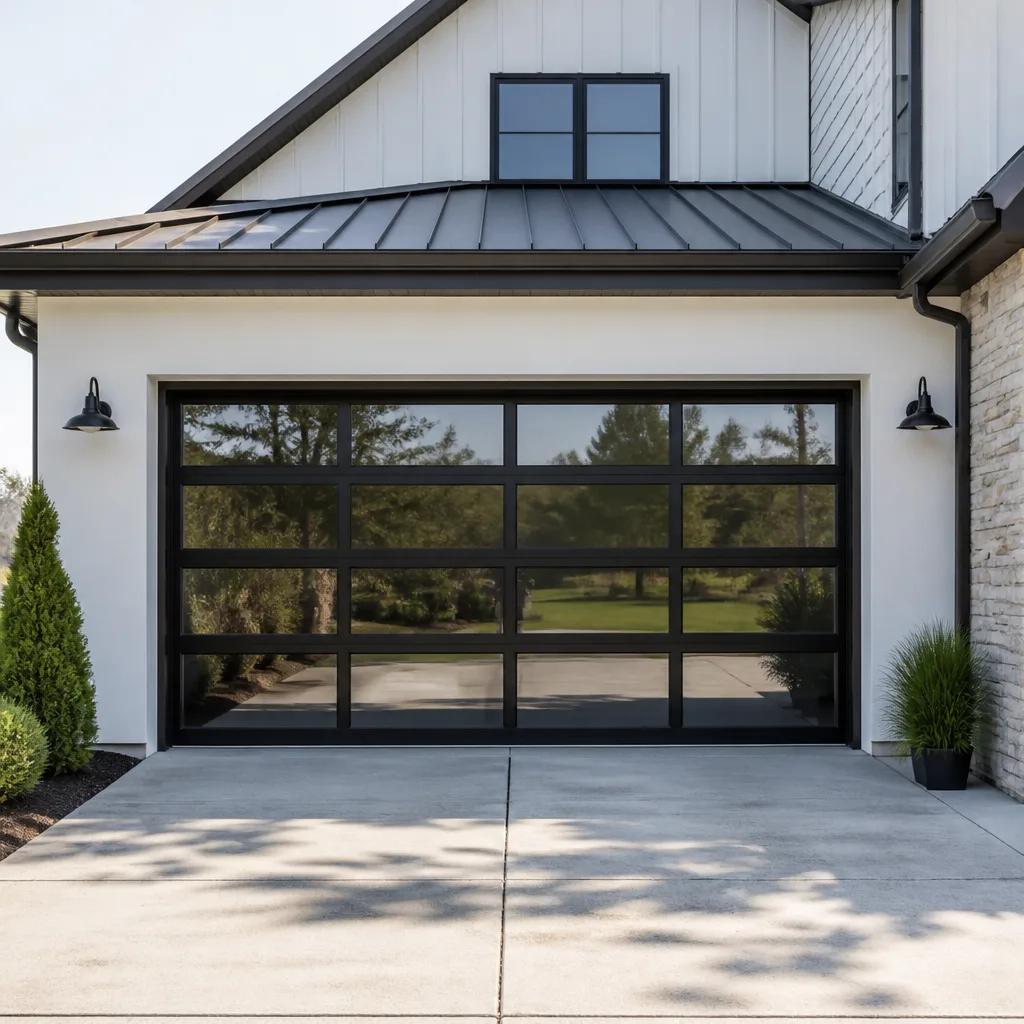 Full-view glass
 LiftMaster openers
 Chamberlain openers
Full 25-point door and opener safety check with every visit - springs, cables, rollers, tracks, and your LiftMaster or Chamberlain opener included
You get a price before we start. It does not change when the truck arrives.
Get your free estimateHow to Hire a Garage Door Contractor in New York: A Step-by-Step Guide
Here’s something most New York homeowners don’t realize until it’s too late: New York State does not require a specialty license to repair garage doors. Anybody with a pickup truck and a socket wrench can call themselves a garage door contractor, print business cards, and start touching torsion springs. That’s why hiring a garage door contractor in New York is less about finding someone who can do the work and more about knowing how to separate the accountable operators from the ones who quote $89 on the phone and leave a $600 invoice on your workbench. This guide walks through the exact documents to request, the questions that expose bait-and-switch operators, and the written guarantees that actually mean something when a repair fails in February. For more guides & resources, visit our blog.
Quick Answer
To hire a garage door contractor in New York, request proof of general liability insurance and worker’s compensation coverage before any work begins, insist on a written price delivered before the technician opens a single panel, and ask for the warranty terms in writing, not spoken. A legitimate contractor will name a two-hour arrival window, show up in a marked vehicle, and back the repair with a written guarantee that covers parts and labor for at least 90 days. Skip anyone who refuses to put numbers on paper or demands cash only.
Styles & brands we work with
Table of Contents
- The Documents to Request Before Any Work Begins
- Why a Written Price Is the Single Best Filter
- Evaluating the Arrival Window: What Real Contractors Do
- What a Legitimate Warranty Actually Covers in Writing
- Red Flags Specific to the New York Market
- Questions to Ask Before You Book
- Why Brand Familiarity Matters for Parts and Service
- Common Mistakes to Avoid
- When to Call a Professional
- Frequently Asked Questions
The Documents to Request Before Any Work Begins
A garage door weighs between 130 and 400 pounds depending on the material, and the torsion spring that lifts it stores enough energy to cause serious injury if mishandled. That’s why the first checkpoint in hiring a contractor in New York is verifying that the person arriving at your door is insured to be there. Request two documents specifically: a certificate of general liability insurance and proof of worker’s compensation coverage. General liability covers damage to your home if a technician’s mistake cracks a panel or breaks a window. Worker’s compensation matters because if an uninsured worker gets hurt on your property, in New York the homeowner can be drawn into the claim. Both documents should list the company name you’re hiring, not a parent corporation or a name that doesn’t match.
Here’s how to verify both documents in under five minutes.
- Ask for a current certificate of insurance (COI) sent directly from the insurance agent or broker, not a photocopy handed to you by the technician. A legitimate operator can have this emailed to you before the appointment.
- Check the policy dates. Garage door work is seasonal in New York. Some operators let policies lapse in winter when call volume drops. If the COI expired in November and you’re calling in March, ask for a renewal certificate.
- Confirm worker’s compensation coverage explicitly. In New York, worker’s comp is required for any business with employees. An independent operator working alone may claim an exemption, but that transfers more risk to you as the homeowner.
- Cross-check the phone number. Call the number on the COI and ask if the company is currently covered. This takes three minutes and filters out anyone running a paper-only operation.
Bramwell Garage Doors New York carries current general liability and worker’s compensation coverage at every location, and we’ll provide documentation before the technician arrives. Every technician is background-checked and arrives in uniform with a marked vehicle parked in your driveway. You know who’s arriving before the doorbell rings.
Why a Written Price Is the Single Best Filter
The most common complaint we hear from New York homeowners who call us after a bad experience is some version of the same story: the phone quote was $129, the technician found “additional problems,” and the final invoice was $680. This is the bait-and-switch pattern that defines the low end of the New York garage door market, and the fix is embarrassingly simple. Require a written price before any work starts. Not a verbal estimate. Not a range. Not “somewhere between three and five hundred, we’ll see.” A written price, with line items, delivered before the technician touches a spring.
Here’s why this works as a filter. A contractor who operates honestly has no problem writing down a price because the price was always going to be the price. A contractor who intends to inflate the number after the door is in pieces will resist writing anything down because a written number is harder to walk back. The pushback usually sounds reasonable: “I can’t know the full scope until I open it up.” That’s true for some jobs, which is why the written price should cover the diagnostic outcome. The Kingswell Way, which has governed garage door repair in New York since 2001, operates on a simple rule: say the price before the work. If additional problems surface during the repair, the technician stops, explains what changed, and writes a new price before continuing. The number on the invoice matches the number the homeowner agreed to. On every job, without exception.
For reference, most torsion spring replacements in New York run $150 to $280 parts and labor included, depending on spring size and door weight. A full opener replacement with a Chamberlain or Genie unit typically lands between $350 and $600 installed. If a phone quote comes in dramatically below those ranges, the gap is usually made up at your door.
Evaluating the Arrival Window: What Real Contractors Do
An arrival window is a commitment, not a suggestion. When you book a garage door repair in New York, pay attention to how the company talks about time. A real contractor gives you a two-hour window and then calls when the technician is 30 minutes out. A vague “sometime in the afternoon” or “we’ll be there between 10 and 4” is not a scheduling system, it’s a placeholder, and it signals that the operation doesn’t manage its dispatch tightly. That matters because a company that can’t manage its schedule probably can’t manage its parts inventory or its warranty claims either.
Here’s what a professional arrival commitment looks like in practice:
- A specific window: “Tuesday between 10 a.m. and noon.”
- A call or text when the technician departs the previous job: “Marcus is on his way, ETA 25 minutes.”
- A technician who introduces himself by name, arrives in a uniform, and drives a marked van or truck.
Something else worth knowing: in New York, traffic in Manhattan, Brooklyn, and Queens routinely turns a 15-minute drive into a 50-minute crawl. A contractor who builds that reality into the schedule, rather than blaming the bridge when he’s two hours late, is one who actually works in this city. Bramwell Garage Doors New York gives every homeowner a stated arrival window before the appointment and a courtesy call when the technician is en route. The window is real, not a range wide enough to park a bus in.
What a Legitimate Warranty Actually Covers in Writing
Most garage door failures happen in the first three months after a repair, not the first three years. A torsion spring installed with the wrong torque rating will carry the door for a few weeks and then fatigue out. A cable adjusted loosely will hold until one cold New York morning when the drum slips and the door slams crooked. See our Seasonal Garage Door Care for New York: Year-Round Homeowner’s Guide for how temperature swings affect your system. This is why a verbal assurance at the end of a job is worth nothing. What you need is a written warranty with specific terms: what’s covered, for how long, and what triggers a free return visit.
Here’s what to look for in a written garage door warranty:
- Coverage term: A legitimate spring or cable replacement warranty should run at least 90 days. Better contractors extend it to a full year. If the term is 30 days, the contractor is telling you something about how long he expects his work to last.
- Parts and labor included: Some warranties cover the part but not the labor to install it, which means a “warrantied” spring failure still costs you $150 in service time. Ask explicitly: does the warranty include labor?
- Specific failure criteria: What does “failure” mean? A written warranty should define it. If the spring breaks, the door won’t lift, or the opener stops responding, that’s a failure. If the door squeaks after a year of use, that’s maintenance, not failure.
- Return visit policy: How quickly will the contractor return if something fails? A same-week commitment in writing beats a promise to “squeeze you in” that never materializes.
The Kingswell Guarantee, which backs every garage door spring repair in New York performed by Bramwell, includes the 365-Day Done Right Promise. If the repair fails inside the guarantee period, Bramwell returns and fixes it at no charge. That commitment is delivered in writing on every job, not spoken at the door and forgotten. Ask any contractor you’re comparing to show you the written terms before you hire them. If the warranty only exists as a sentence in a sales pitch, it doesn’t exist.
Red Flags Specific to the New York Market
New York’s garage door market has a particular flavor of problem: an overabundance of part-time operators who work out of personal vehicles, advertise through neighborhood Facebook groups, and disappear when a repair fails. Some of these operators are capable mechanics. Many are not. The problem is that you don’t know which one you’re getting until the door is in pieces. Here are the signals that should make you pause before hiring.
- Cash-only demands. In New York, a legitimate business accepts payment methods that leave a paper trail. A contractor who insists on cash is often avoiding the tax and insurance trail that would identify him as operating outside the system. Cash means no receipt, and no receipt means no recourse.
- Unmarked vehicles. A contractor who shows up in a personal car with no signage is, at best, a solo operator with no overhead to protect. At worst, he’s working uninsured and using a borrowed phone number. Marked vehicles signal that the operator has invested in a real business that can be found again.
- Refusal to name a price before opening the door. Once the door is open and the spring is off, you have zero leverage. Any contractor who won’t quote a price before starting work is telling you that the price will be whatever he wants it to be once you’re committed.
- Door-to-door solicitation after a storm. After a nor’easter or a heavy ice event, unlicensed operators canvass New York neighborhoods offering “free inspections” to homeowners with dented panels or water-damaged doors. These operations are frequently transient and gone by the time a spring they installed six weeks ago fails.
- A phone number that goes to voicemail during business hours. In New York, garage door emergencies don’t respect business hours. A company that answers its phone with a live person at 2 p.m. on a Thursday and at 11 p.m. on a Saturday is a company that’s actually operating. A company that routes every call to voicemail is routing every problem to voicemail too.
Bramwell Garage Doors New York has operated under the Kingswell standard since 2001. A live person answers the phone 24 hours a day, 7 days a week, including nights, weekends, and holidays. No voicemail tree, no “leave a message and we’ll call you back next business day.” When your garage door won’t open at 6 a.m. and your car is trapped inside, you need a person, not a recording.
Questions to Ask Before You Book
Most homeowners don’t know what to ask a garage door contractor because they’ve never hired one before. That’s not a failure on their part. A garage door repair is the kind of job most people face once every ten years, and the language is unfamiliar. Our Complete Guide to Garage Door in New York covers the fundamentals if you’re starting from scratch. Torsion springs, extension springs, cables, drums, limit switches, photo eyes. The vocabulary arrives faster than the understanding. Here are the questions that cut through the jargon and tell you whether you’re hiring a real contractor or a guy with a pickup and a prayer.
- “Can you send me a certificate of insurance before the appointment?” A legitimate company says yes immediately. An uninsured operator changes the subject.
- “Will you give me a written price before any work starts?” The answer should be an unqualified yes. If there’s hesitation or a lecture about how “every job is different,” you’ve learned what you need to know.
- “What does your warranty cover, and is it in writing?” Listen for specifics: parts, labor, duration, return visit policy. Generic reassurances are not a warranty.
- “Who exactly will be arriving, and what’s my arrival window?” A real contractor names a window and calls ahead. A vague operation gives you a day, not a time.
- “What brands do you service?” A contractor who can’t name the major manufacturers, or claims to service “all of them” without specifics, hasn’t seen enough doors. Bramwell is authorized to service Chamberlain, Genie, Clopay, Amarr, and the other major brands New York homes actually have installed.
- “What happens if the repair fails in three months?” This is the question that separates honest operators from the rest. The right answer includes a written commitment and a free return visit. The wrong answer is a shrug.
Why Brand Familiarity Matters for Parts and Service
New York homes run on a handful of garage door brands, and that’s good news for homeowners who know the names. Chamberlain and Genie dominate the opener market. Clopay and Amarr supply most of the residential doors in the five boroughs and the surrounding counties. A contractor who services these brands regularly can diagnose a problem quickly because the parts are familiar. A contractor who’s never seen a Chamberlain belt-drive opener before is learning on your door.
Here’s what brand familiarity means in practice. A Chamberlain opener with a failing logic board presents specific symptoms: the wall control works, the remote doesn’t, and the lights flash in a particular sequence. A technician who services Chamberlain openers weekly recognizes that sequence in seconds and knows whether the fix is a replacement board or a full opener swap. A technician who doesn’t know the brand starts swapping parts and hoping. The same logic applies to Clopay doors with their specific spring drum configurations and Amarr doors with their unique track profiles. When a contractor lists the brands they’re authorized to service, that list matters. It’s not marketing. It’s a statement of which doors they can fix correctly the first time.
Bramwell Garage Doors New York is authorized to service all major brands, including Chamberlain, Genie, Clopay, and Amarr. The technicians who arrive at your door have seen your specific opener model and door configuration before. That familiarity is why most repairs are completed in a single visit, with parts carried on the truck.
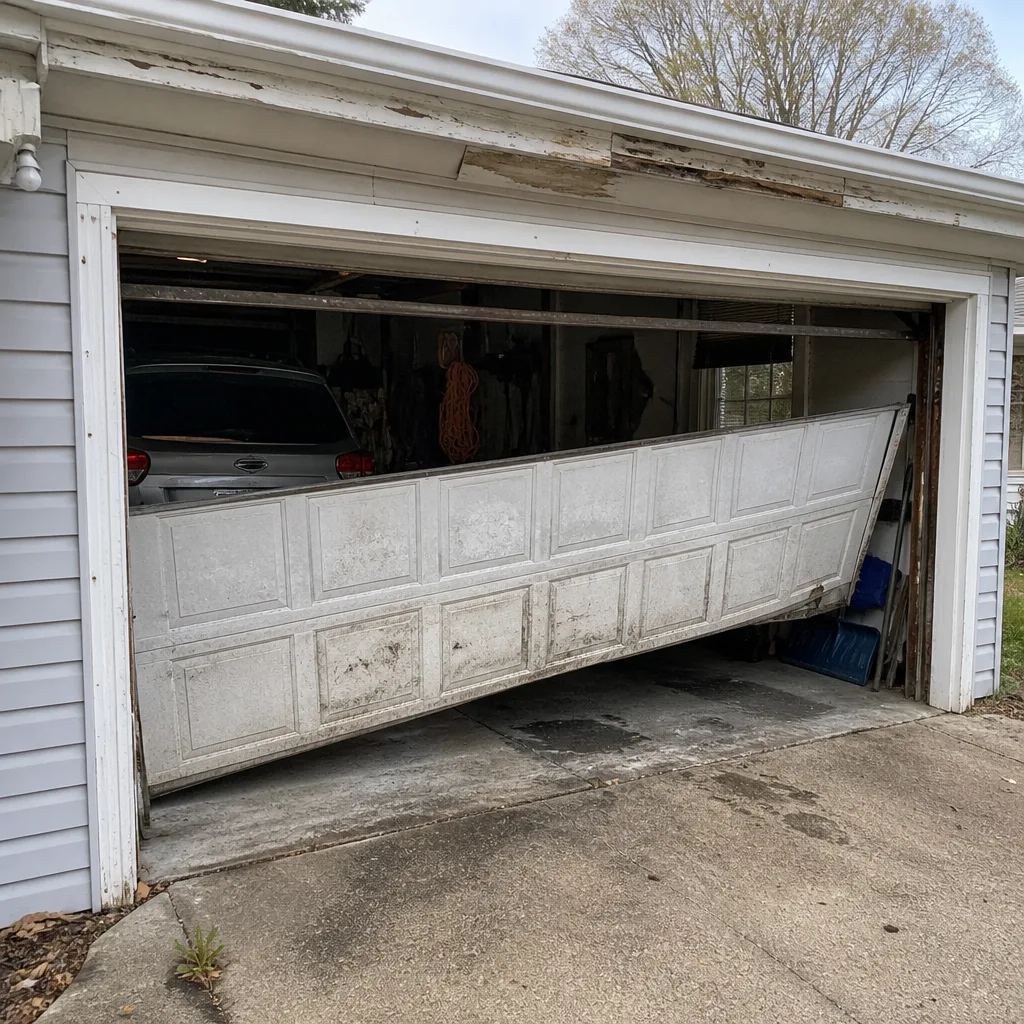
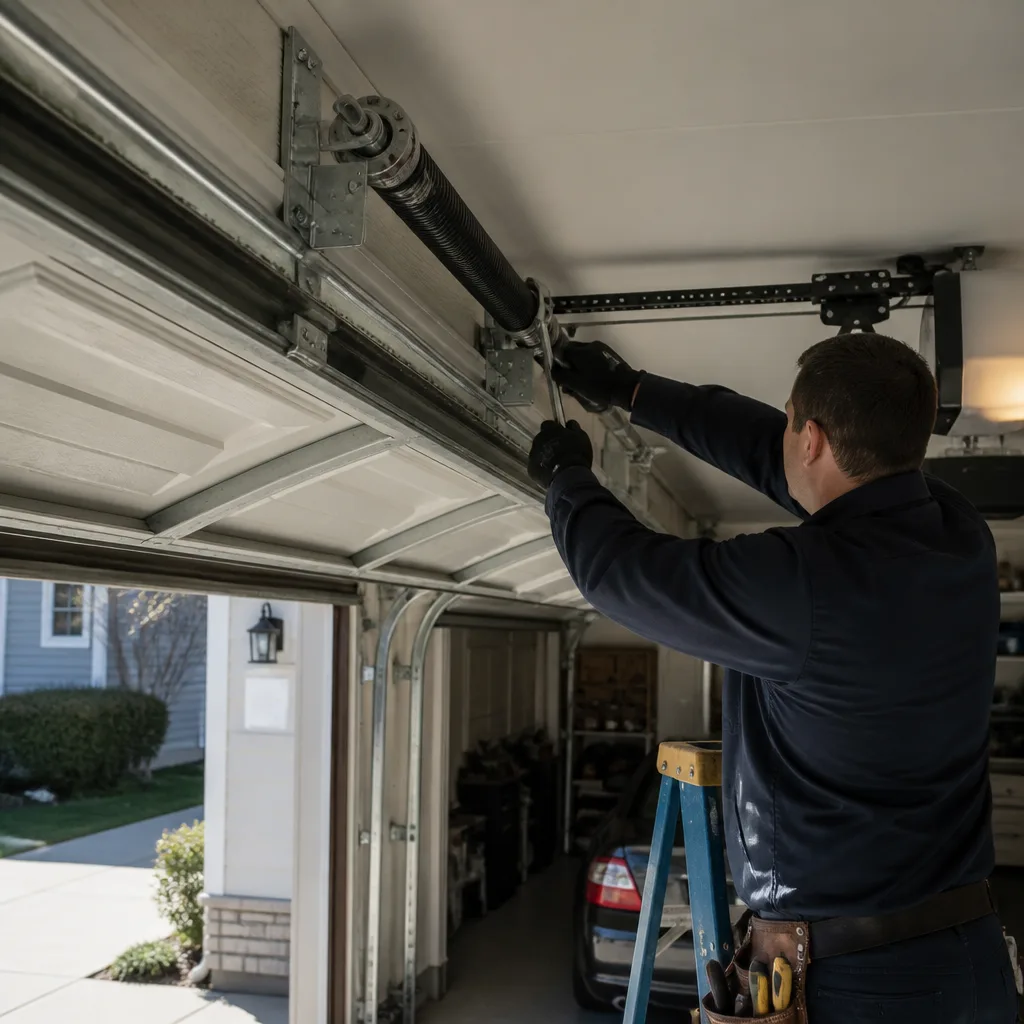
See the difference
 Before
 After
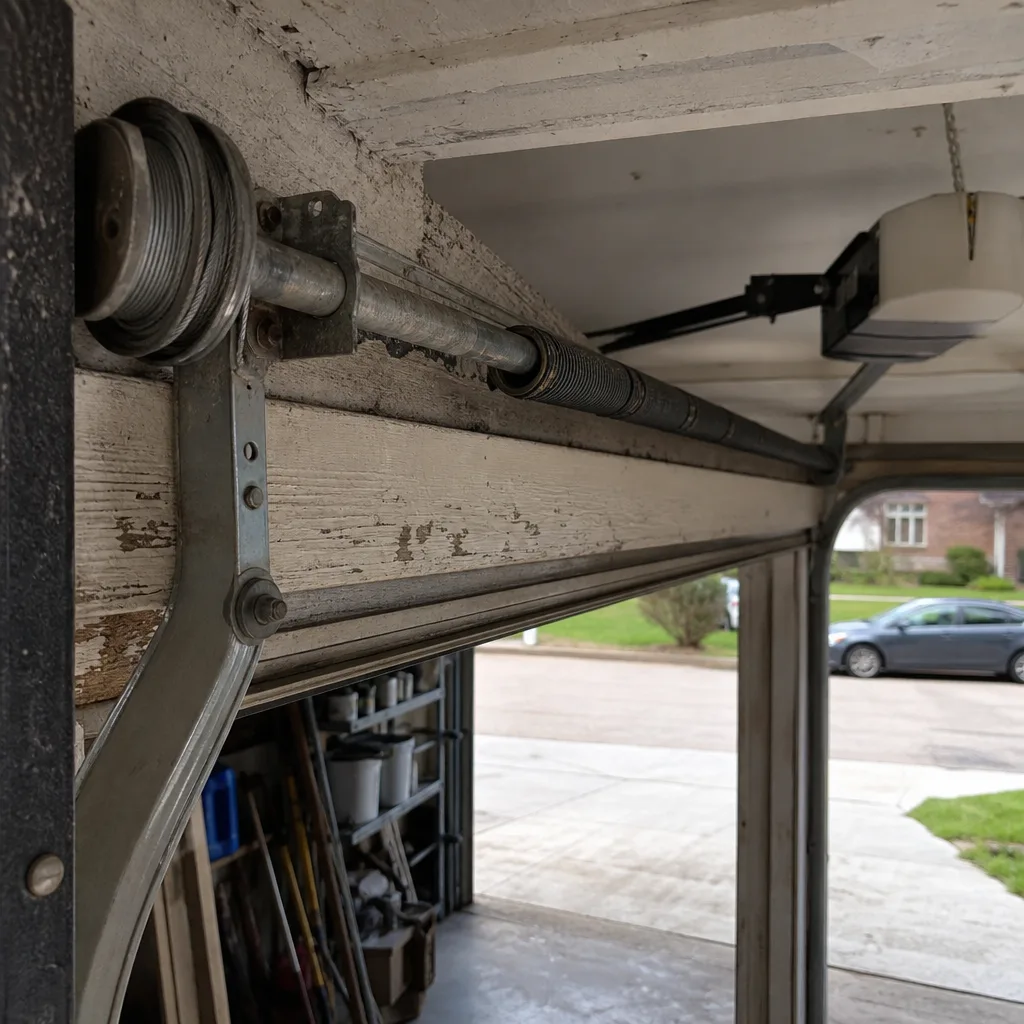 Before
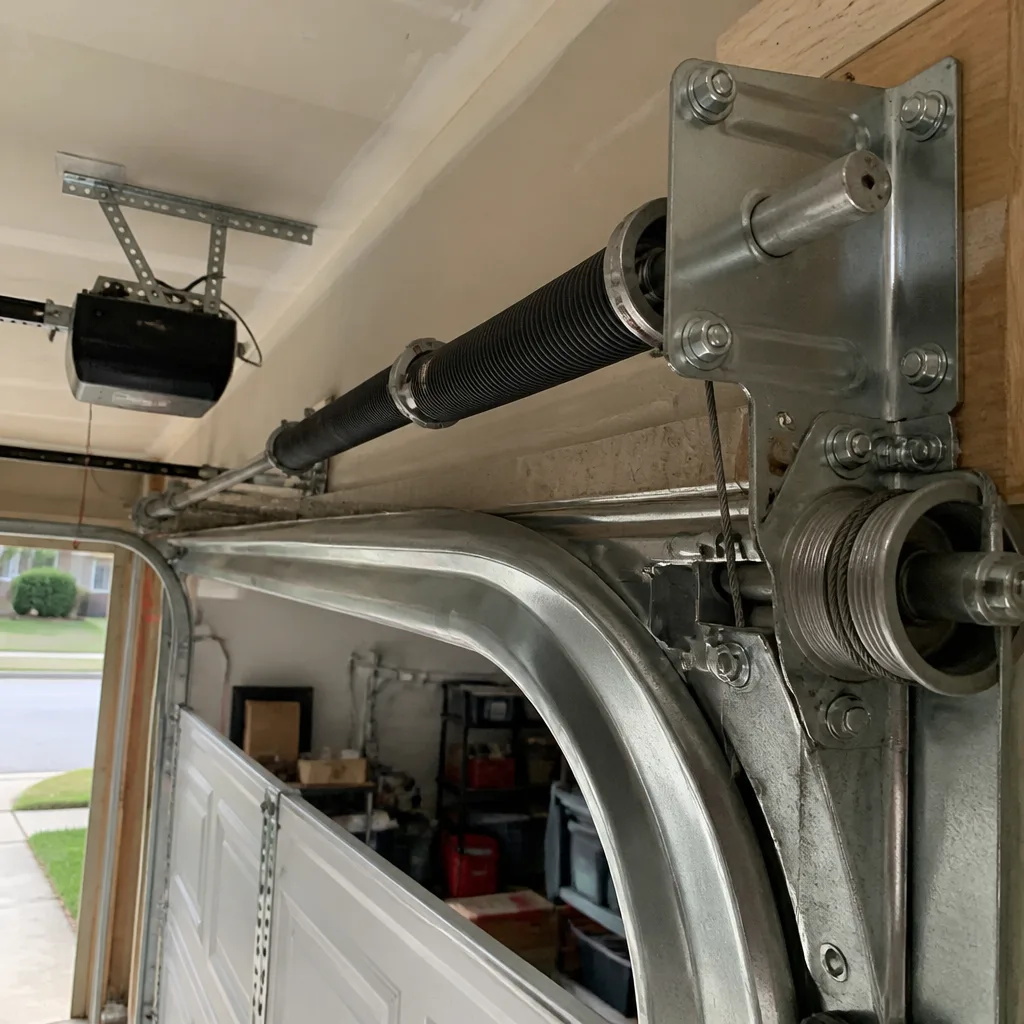 After
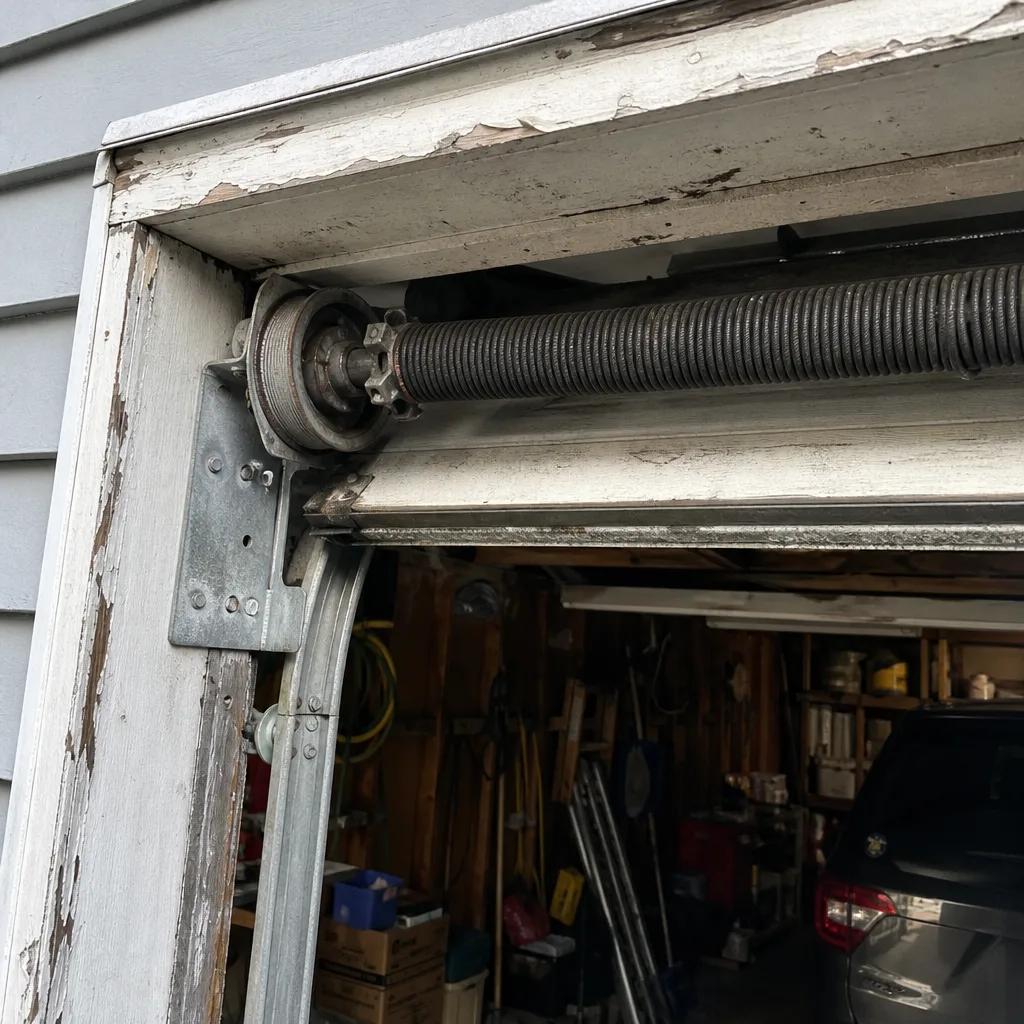 Before
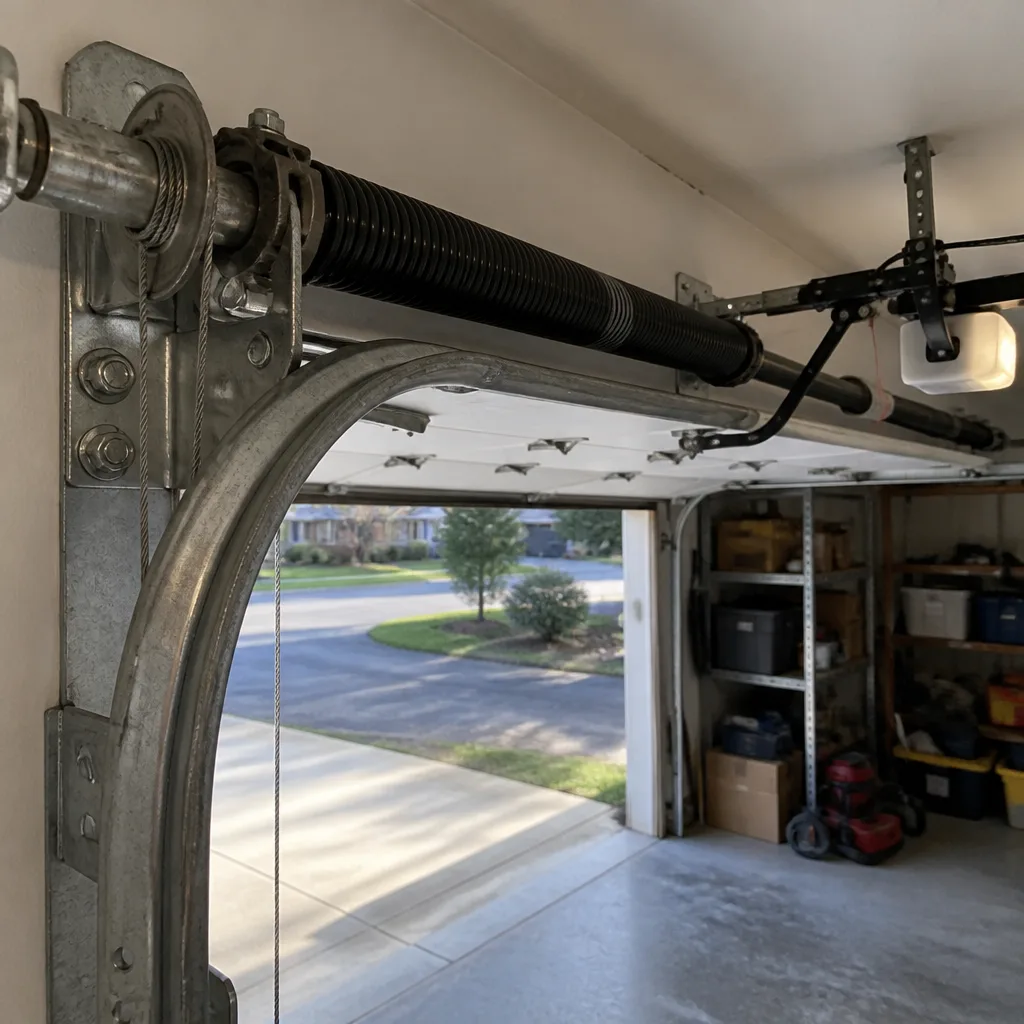 After
What to Expect During a Professional Repair Visit
Knowing what a professional visit looks like helps you spot a non-professional visit before it costs you money. Here’s the sequence a homeowner should expect when they hire a contractor who operates the right way in New York.
- The technician arrives within the stated window and calls ahead. You get a call or text 20 to 30 minutes before arrival. The technician introduces himself by name and arrives in a uniform with a marked vehicle.
- The diagnosis happens with you present. The technician examines the door, identifies the problem, and explains it in plain language. You should understand what’s broken and why.
- A written price is presented before any work begins. The price includes parts, labor, and any service fees. Nothing is left to be discovered later.
- If additional problems surface, the technician stops and re-prices. You’re never committed to work you didn’t approve at a price you didn’t see.
- The repair is performed with the right parts for the door. A torsion spring is matched to the door’s weight and cycle rating. A cable is replaced as a pair, not a single. The opener’s force settings are adjusted correctly, so the door reverses when it should.
- The work area is cleaned before the technician leaves. Old springs, packaging, and debris go in the truck. The Kingswell Way includes leaving the job site cleaner than we found it, and that’s a standard, not a courtesy.
- A written guarantee is provided. You receive the warranty terms in writing, with specifics on coverage, duration, and the return visit policy.
If any of these steps is missing, particularly the written price or the written guarantee, you’re working with a contractor who either doesn’t know the standard or chooses not to meet it. Either way, that’s information.
Common Mistakes to Avoid
- Hiring based on the phone quote alone. The lowest quote in New York is often the highest final invoice. A $79 spring replacement quote becomes a $600 job when the technician “discovers” that the drums and cables also need work. Get the full written price before work begins.
- Not asking about insurance. An uninsured technician who gets hurt in your New York garage can put your homeowner’s policy at risk. Check the COI before the door comes off its track.
- Accepting a verbal warranty. “We’ll take care of you if anything goes wrong” is a sentence, not a warranty. If it’s not in writing, it doesn’t exist when the spring fails in August.
- Ignoring the arrival window red flag. “We’ll be there Tuesday” is not a schedule. A contractor who can’t commit to a window can’t commit to anything else either.
- Paying in cash with no receipt. No receipt means no proof of payment, no warranty documentation, and no recourse if the repair fails. Always get a written invoice.
- Choosing a contractor who doesn’t service your brand. In New York, most openers are Chamberlain or Genie, and most doors are Clopay or Amarr. A contractor unfamiliar with your specific equipment is guessing, and you’re paying for the education.
- Waiting until the door fails completely to start looking. The worst time to vet a contractor is at 6 a.m. when your car is trapped in the garage and you’re late for work. Find your contractor now, save the number, and call them when you need them.
When to Call a Professional
Some garage door repairs are safe to handle yourself. Lubricating hinges, tightening visible bolts, and cleaning the photo eye sensors are all reasonable DIY tasks. But anything involving the torsion spring, the cables under tension, or the opener’s electrical components deserves a trained professional, and here’s why: the torsion spring stores enough energy to break a hand or worse if it slips during removal. The cables run through pulleys that can sever a finger if they release unexpectedly. In New York, where winter cold makes metal brittle and spring failures more common, these are not hypotheticals. If your door won’t open, makes a loud bang, hangs crooked, or has a visible cable snap, stop using it and call a professional. Bramwell Garage Doors New York home offers free estimates across the city. Call (585) 669-6563 and a live person will answer, day or night.
Frequently Asked Questions
Most garage door repairs in New York run between $150 and $600 depending on the problem. A torsion spring replacement typically costs $150 to $280 parts and labor included. An opener replacement with a Chamberlain or Genie unit runs $350 to $600 installed. The exact price depends on the door’s weight, the spring’s size, and the opener’s horsepower rating. A professional contractor provides a written price before any work begins, so there are no surprises on the invoice. Call (585) 669-6563 for an exact quote, estimates are free.
No, New York State does not issue a specialty license for garage door repair, which means anyone can offer the service without state-level qualification. This is why insurance verification and written warranties matter so much when hiring in New York. A legitimate contractor carries general liability and worker’s compensation coverage and will provide documentation before the job starts. An uninsured operator exposes you to risk without any recourse.
A legitimate contractor in New York will provide a certificate of insurance before the work begins, deliver a written price before any work starts, arrive within a stated two-hour window in a marked vehicle, and provide warranty terms in writing. These four checkpoints filter out most problem operators immediately. If any of them is missing, keep looking.
Ask for a certificate of insurance, confirm the written price policy, request warranty details in writing, ask who will arrive and when, confirm your brand is serviced, and ask what happens if the repair fails. The answers reveal whether the contractor operates with accountability or survives on verbal promises. A good contractor answers every question directly, without deflection.
Spring repair in New York typically runs $150 to $280 for a torsion spring replacement, parts and labor included. Extension springs run on the lower end, while heavy double-door springs land higher. The price should be quoted in writing before the technician starts work. For an exact number on your door, call (585) 669-6563 for a free estimate, and a live person will answer.
Typically not for mechanical failure. Homeowners insurance in New York covers garage door damage from covered events like storms, fires, or vehicle impact, but not normal wear and tear or spring fatigue. If a tree falls on your door, file a claim. If the spring snaps from age, that’s a maintenance repair and it’s on you. A written warranty from your contractor is the protection that matters for mechanical repairs.
No, and this is not a light recommendation. Torsion springs hold enough tension to cause serious injury or death if they release unexpectedly during removal. The tools are specialized, the technique is unforgiving, and the consequences of a mistake are permanent. Hire a trained professional with the right equipment and insurance. Read our DIY vs Professional Garage Door: The New York Homeowner’s Decision Guide before deciding to tackle this yourself. The $150 to $280 you’ll spend in New York is cheaper than a hospital visit.
A properly installed torsion spring in New York should last 10,000 to 20,000 cycles, which translates to 7 to 14 years for a typical single-car household. An opener should run 10 to 15 years before needing replacement. If a repair fails within a year, the workmanship or the parts were defective, and a written warranty should cover the fix. The 365-Day Done Right Promise from Bramwell Garage Doors New York guarantees exactly that: if the repair fails inside a year, we return and fix it at no charge.
What the Kingswell Guarantee Means for New York Homeowners
Most of this guide has been about how to avoid bad contractors. Here’s what happens when you hire a good one. The Kingswell Guarantee governs how garage door installation in New York and every repair is run, and it operates on four commitments that are enforced on every job, at every independently owned and operated Bramwell location.
First, a written price before any work starts. On every job, without exception. The number on the invoice matches the number the homeowner agreed to. Second, a real arrival window. The technician shows up when promised and calls ahead when en route. Third, a clean job site. Old parts, packaging, and debris leave with the truck. Fourth, a written guarantee on every repair. The 365-Day Done Right Promise means if the repair fails inside the guarantee period, Bramwell comes back and fixes it at no charge, with a free second visit. Those four commitments have operated under the Kingswell standard since 2001, and they’re written into every job because a spoken promise is not a promise.
Marcus Ellery, who leads Bramwell Garage Doors New York, puts it this way: trust is built in the last five minutes of a job, not the first five. The price was already written down. The technician was on time. The floor is swept. The guarantee is on paper. Those minutes are what separate a contractor from a company.
The Bottom Line
Hiring a garage door contractor in New York is a vetting exercise, and the vetting is simple once you know the checkpoints. Verify insurance. Demand a written price before work starts. Get the warranty in writing. Watch for the red flags: cash-only demands, vague arrival promises, unmarked vehicles, and contractors who can’t name the brands they service. The right contractor will pass every checkpoint without hesitation because every checkpoint is just standard operating procedure for a business that’s built to last. Bramwell Garage Doors New York has operated under the Kingswell standard since 2001, and a live person answers the phone 24/7 at (585) 669-6563.
Written by Marcus Ellery, Owner at Bramwell Garage Doors New York, serving New York since 2001.